
Skip to content

Cart

Your cart is empty

Office Desks

An office desk is a work surface built at 29 to 30 inches high with clearance underneath for a chair to pull in. Office desks at Two Seventy Nine run from narrow writing desks to L-shaped corner desks, and each listing states its measured width, depth and height.

Sort by

3 products

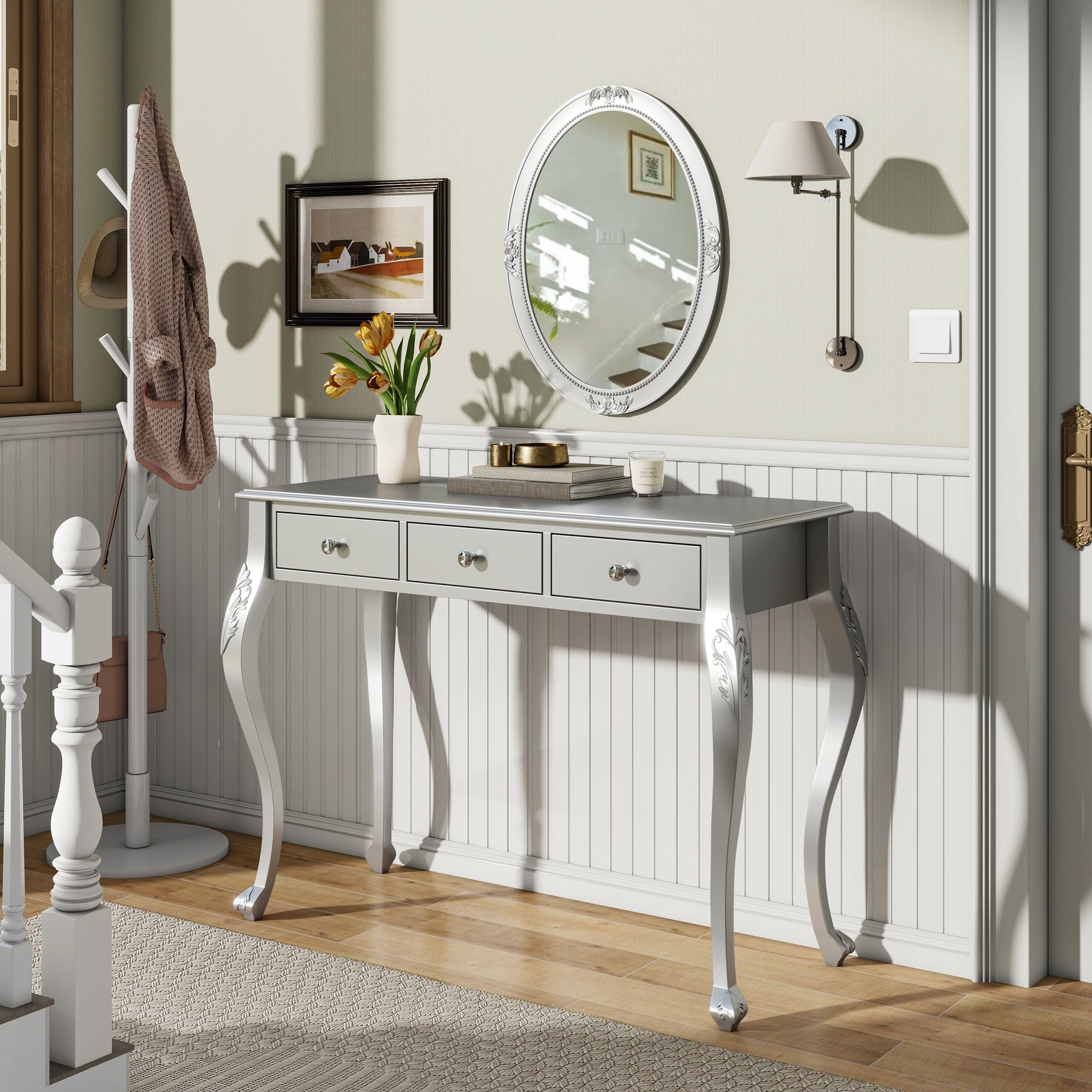
Save $85Silver Dressing Table with Oval Mirror and 3 Drawers
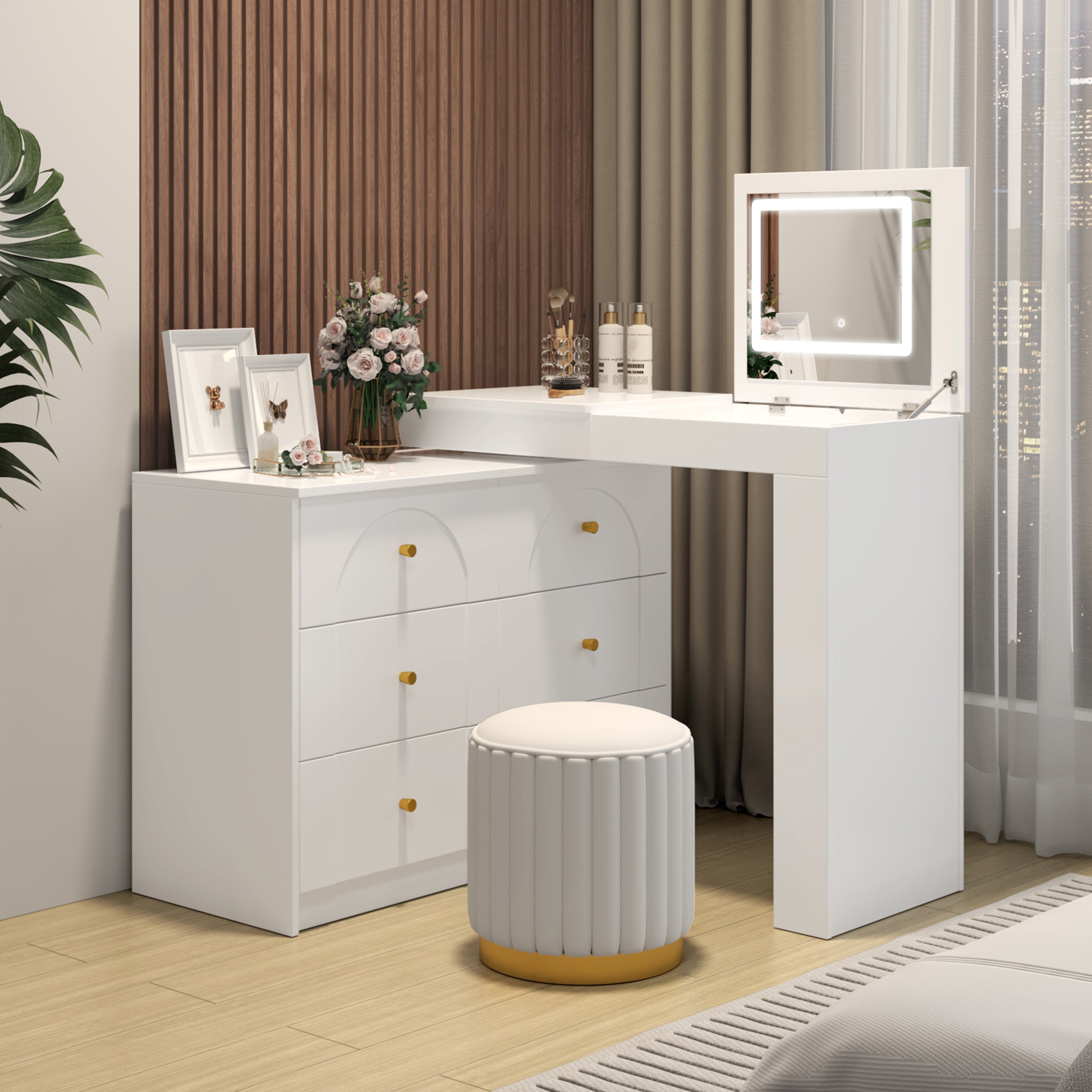
Save $160Flip-Top Vanity Desk with Lighted Mirror and 5 Drawers, White
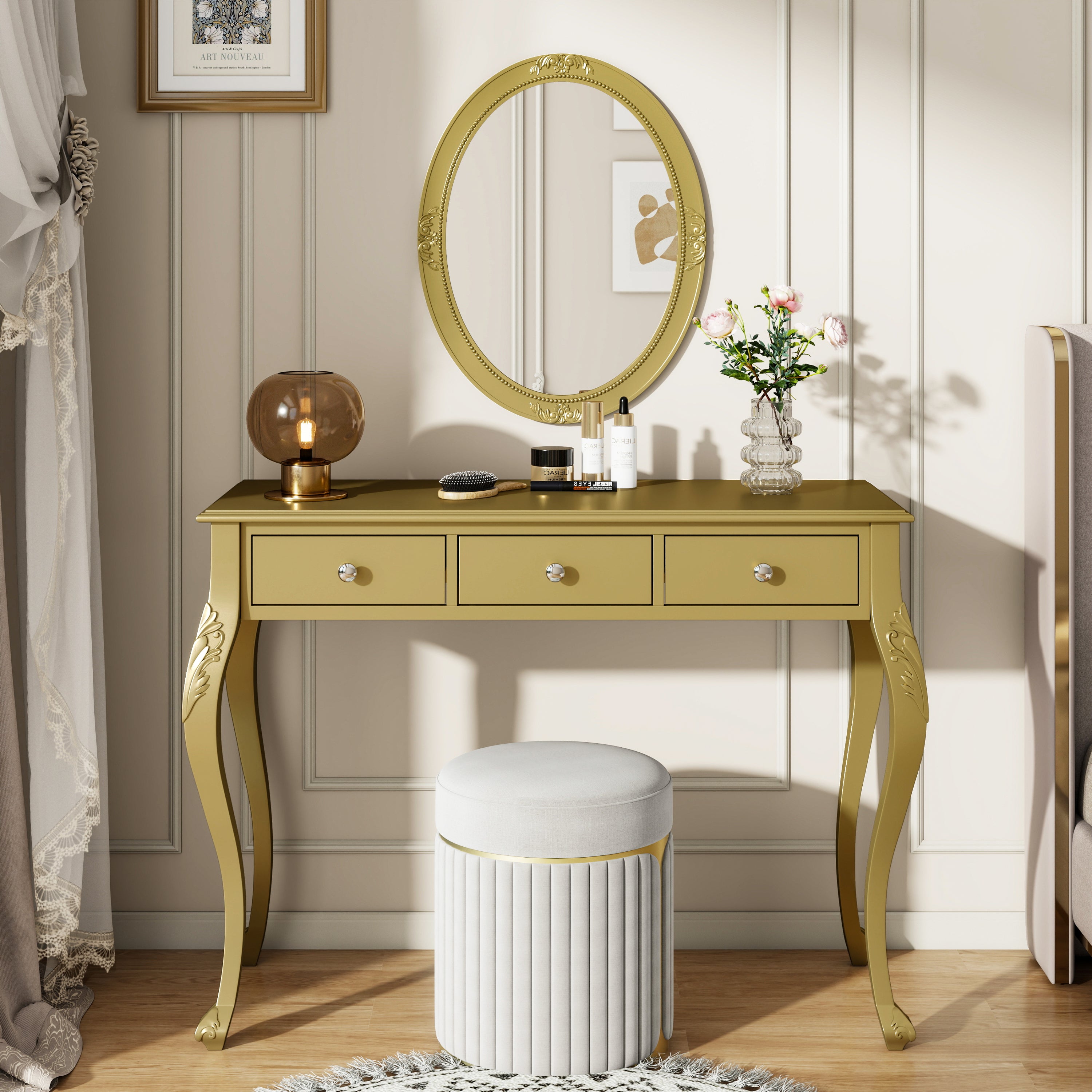
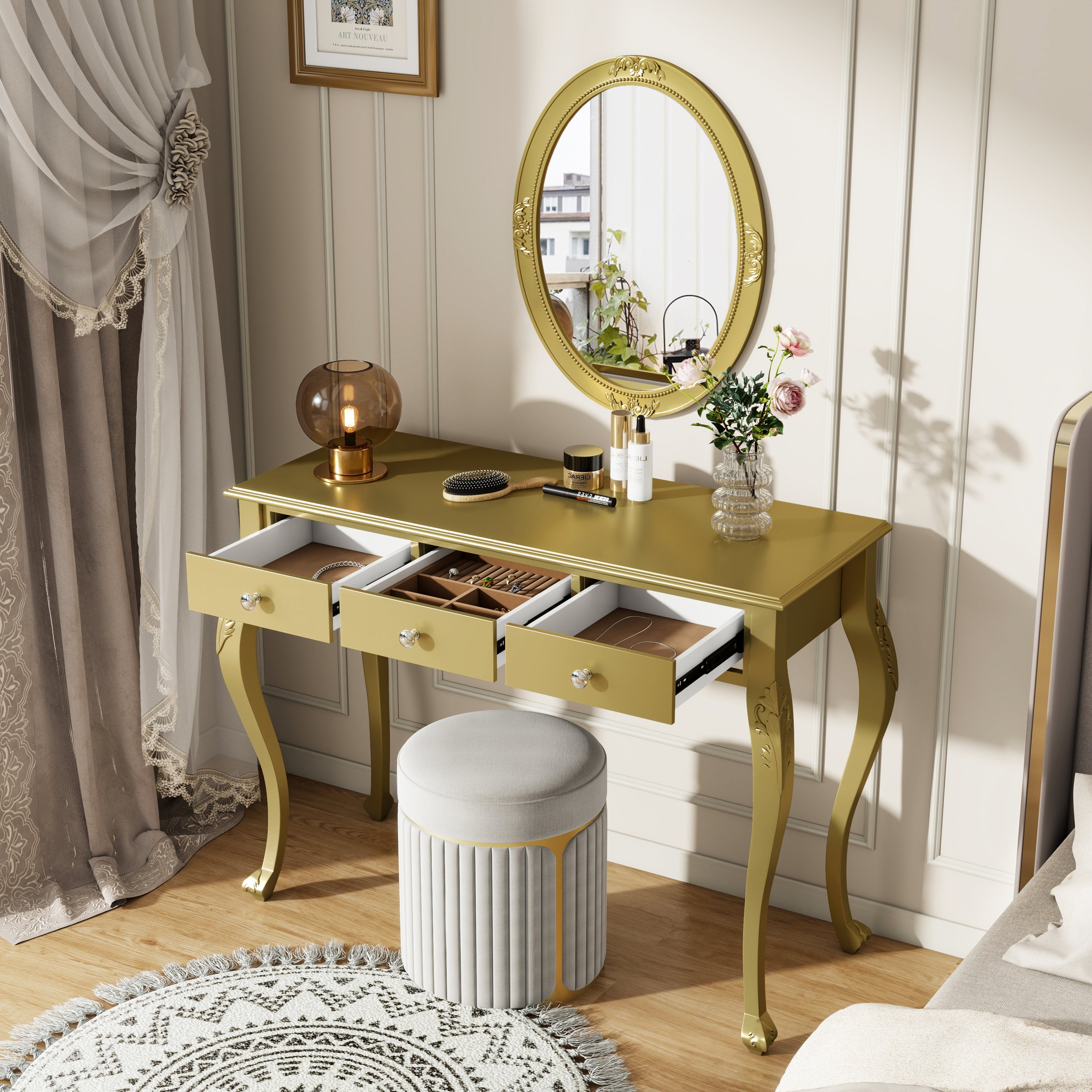
Save $80Gold Vanity Desk with Oval Mirror and 3 Drawers
Gold Vanity Desk with Oval Mirror and 3 Drawers Sale price$315 Regular price$395

What size desk fits the space

Measure the wall first, then subtract the room a chair needs, which is roughly 36 inches from the desk edge to whatever is behind it. Office desks here run from 11.8 to 82 inches wide and from 6 to about 60 inches deep. A writing desk under 44 inches wide suits a bedroom corner or a hallway. A desk over 55 inches wide, or an L-shaped desk, is the one to choose if two monitors and a notepad need to sit side by side.

Knee clearance, the spec most listings leave out

Knee clearance is the height from the floor to the underside of the desk, and it decides whether a tall person can actually sit at it. Where the supplier publishes the figure, it appears in the spec block on the product page; across this range the stated figures run from 23 inches to 44 inches. A drawer box or a modesty panel under the surface reduces clearance, so a desk with a wide centre drawer will sit lower than its overall height suggests.

Hutches, drawers and cable management

A hutch adds vertical storage without adding footprint, which is why it suits a small room better than a wider desk does. Several desks in this range carry a hutch, and others carry file drawers sized for hanging folders. Where a desk includes a built-in charging station, the listing names the port types, because an AC outlet, a USB-A port and a USB-C port are not interchangeable. Grommet holes for routing cables are noted where the supplier states them.

Materials and construction

Desks in this range are built from a mix of materials, and each listing states its own. Some are solid wood, most use engineered board panels with a wood-look surface, and several use a steel frame under a wood or glass top. Construction is stated plainly on every product page next to the dimensions, so the substrate is never left to guesswork. Walnut, oak and natural are the most common finishes here, and a finish name describes the surface rather than the material underneath.

Standing and height-adjustable desks

A height-adjustable desk moves between a seated and a standing position, and the useful spec is the travel range rather than the top height. Models here that adjust state their own minimum and maximum. Electric models with memory presets return to a set height at the touch of a button, which matters if two people share the desk. A manual crank costs less and is slower to change, which in practice means it gets changed less often.

Specifications

Desk height
29 to 30 in
Width range
11.8 to 82 in
Depth range
6 to 59.8 in
Knee clearance range
23 to 44 in where stated
Surface weight capacity
30 to 750 lbs where stated
Types
Writing desk, Computer desk, L-shaped desk, Desk with hutch, Standing desk, Executive desk
Features available
Hutch, Drawers, Charging station, Keyboard tray, Cable grommets, Height adjustable
Finishes
Walnut, Oak, Natural, Espresso
Delivery window
5 to 7 days
Free shipping
Free

Good to know

Frequently asked questions

What is standard desk height?
Standard desk height is 29 to 30 inches from the floor to the top of the work surface. Office desks at Two Seventy Nine are built to that range unless the listing states a height-adjustable range instead. The figure matters because office chairs are designed to pair with it: a chair adjusting through roughly 17 to 21 inches of seat height puts the forearms level with a 29 to 30 inch desk.
What height should a desk be?
A desk should be 29 to 30 inches tall for most adults, and the test is whether your forearms sit level with the surface when your feet are flat on the floor. If a fixed-height desk is slightly too high, raise the chair and add a footrest. If it is too low, a height-adjustable desk solves it properly. Each desk listing states its measured height.
How to choose a home office desk for multiple monitors
For two monitors, choose a desk at least 47 inches wide and 24 inches deep so the screens sit roughly an arm's length away. For three monitors or an ultrawide, an L-shaped desk gives the width without pushing further into the room. Check the stated surface weight capacity as well, because a monitor arm clamps to the edge and loads the desk unevenly rather than spreading weight across it.
How tall is an office desk?
An office desk is 29 to 30 inches tall from the floor to the work surface. Desks with a hutch are taller overall, since the hutch sits above the surface, and their listings state both the work surface height and the overall height. Height-adjustable desks state a range instead of a single figure.
What is the difference between desk height and counter height?
Desk height is 29 to 30 inches and counter height is 36 inches, a gap of about 6 inches. The difference decides which seat fits: a desk chair adjusts through roughly 17 to 21 inches of seat height, while a counter stool sits at 24 to 26 inches. Using a counter stool at a desk raises the shoulders and is a common cause of discomfort that is easy to miss.
How to organize office desk
Keep the surface for what you use daily and move everything else below it. A desk with drawers takes pens, cables and paper off the work surface, and a file drawer sized for hanging folders keeps documents upright rather than stacked. On desks with a built-in charging station, routing chargers through the grommet holes stops cables crossing the surface. Desks with a hutch move reference material to eye level.