Boneless Couch Buying Guide: How to Choose the Right Size, Style & Layout
A boneless couch is one of the easiest ways to make a living room feel softer, more relaxed, and more comfortable without committing to a heavy traditional sectional. But once you decide you like the look, the next question is usually harder: which one should you actually buy?
Should you get a 2-seater or a 3-seater? Do you need an ottoman? Is a boneless sectional couch better for apartments or larger living rooms? Should you choose a structured corduroy style or a softer velvet silhouette?
This guide breaks down how to choose the right boneless couch for your space, your layout, and the way you actually live.
If you already know you want to shop the category, start with our boneless couch collection.
First, What Makes a Couch “Boneless”?
A boneless couch is a sofa made without a traditional wood or metal frame. Instead of relying on a rigid internal structure, it uses dense foam, upholstery, and modular pieces to create the shape of the couch.
That is why boneless couches feel different from standard sofas. They are softer, more flexible, easier to move, and usually more relaxed in appearance. Instead of sitting on top of a stiff frame, you settle into foam that gives the couch its shape and comfort.
If you want the full breakdown, we already wrote a complete guide to what a boneless couch is.
Step 1: Decide How You Want to Use the Couch
The best boneless couch is not always the biggest one. It is the one that matches how you actually use your living room.
Before choosing a size, ask yourself:
Do you mostly sit upright, lounge, nap, or watch movies?
How many people usually sit on it at once?
Do you live alone, with a partner, with roommates, or with family?
Do you want something compact or a full lounge-style setup?
Will the couch need to move through narrow doors, stairs, or an elevator?
A boneless couch is especially good when your sofa is not just decorative. If your living room is where you watch shows, scroll, read, work from the couch, host friends, or take the occasional nap, the softer foam construction makes a lot of sense.
Step 2: Choose the Right Size
Most people should start by choosing between a 2-seater, 3-seater, 4-seater, or a setup with ottomans. The right choice depends on your room size and how much lounging space you want.
2-Seater Boneless Couch: Best for Apartments, Studios & Smaller Rooms
A 2-seater boneless couch is usually the safest choice for small spaces. It gives you the comfort of the category without overwhelming the room.
Choose a 2-seater if you live in a studio or one-bedroom apartment, want a small boneless couch for a compact living room, need something easier to carry or reposition, or are furnishing a bedroom, office, guest room, or reading corner.
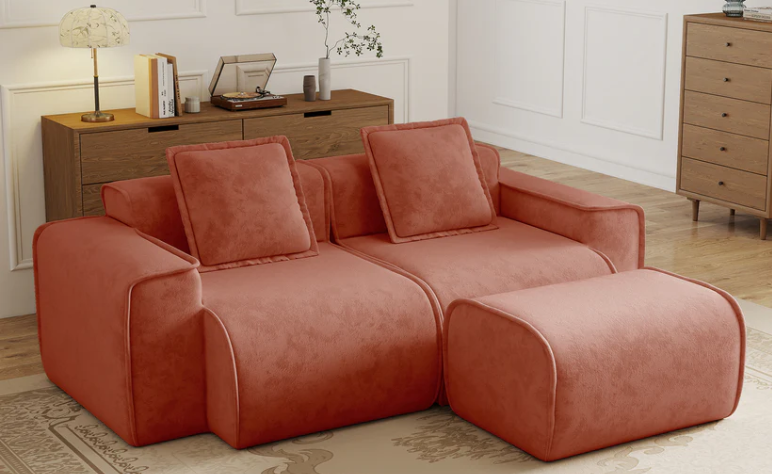
A 2-seater can still feel generous because boneless couches are typically deep, soft, and lounge-friendly. If you want more flexibility, choose a 2-seater with an ottoman so you can create a chaise-style layout when you want to stretch out.
3-Seater Boneless Couch: Best Everyday Choice
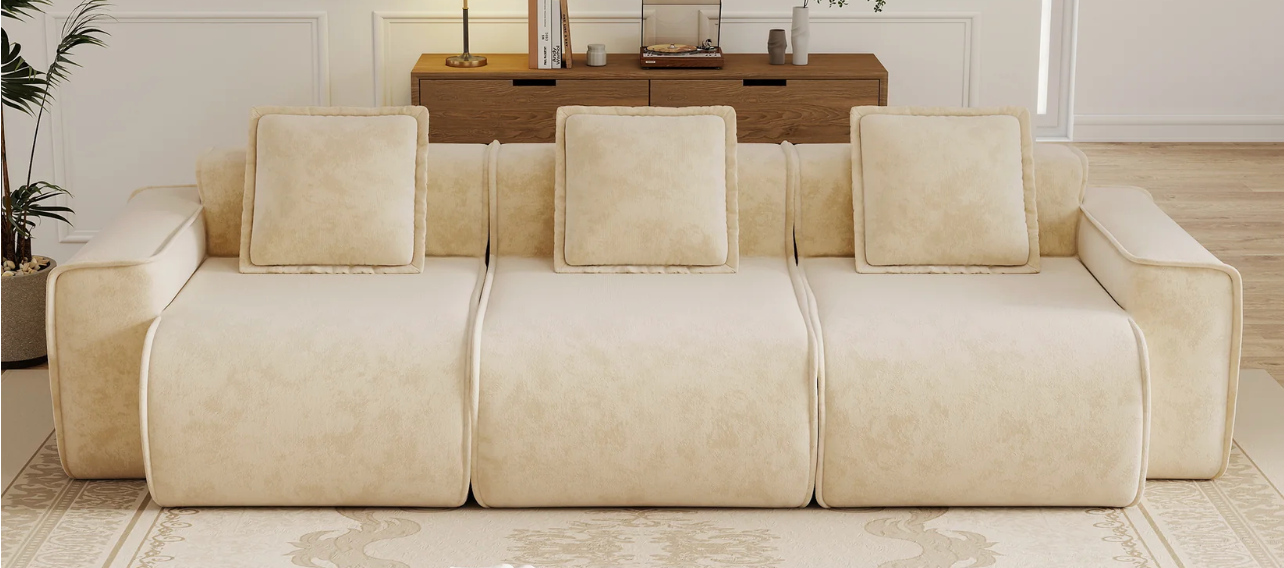
For most living rooms, a 3-seater boneless couch is the sweet spot. It gives you enough room to stretch out without taking over the entire space.
Choose a 3-seater if this will be your main living room couch, you want room for two people to sit comfortably, you occasionally host friends, or you want the most versatile option for an apartment or standard living room.
A 3-seater works especially well if you want the couch to anchor the room. It feels like a true sofa rather than an accent piece, but it still keeps the relaxed, modular personality that makes boneless couches appealing.
4-Seater Boneless Couch: Best for Larger Living Rooms & Media Spaces
A 4-seater boneless couch is best when comfort is the whole point of the room. Think movie nights, family rooms, open living areas, and homes where the couch is meant to be the center of gravity.
Choose a 4-seater if you have a larger living room, multiple people use the couch at the same time, or you want the couch to feel like a sectional alternative.
A 4-seater boneless couch can make a room feel incredibly cozy, but it needs breathing room. If your space is narrow, measure carefully before going this large.
Step 3: Decide Whether You Need an Ottoman
An ottoman is one of the best upgrades for a modular boneless couch. It gives you the flexibility of a sectional without forcing you into one fixed shape.
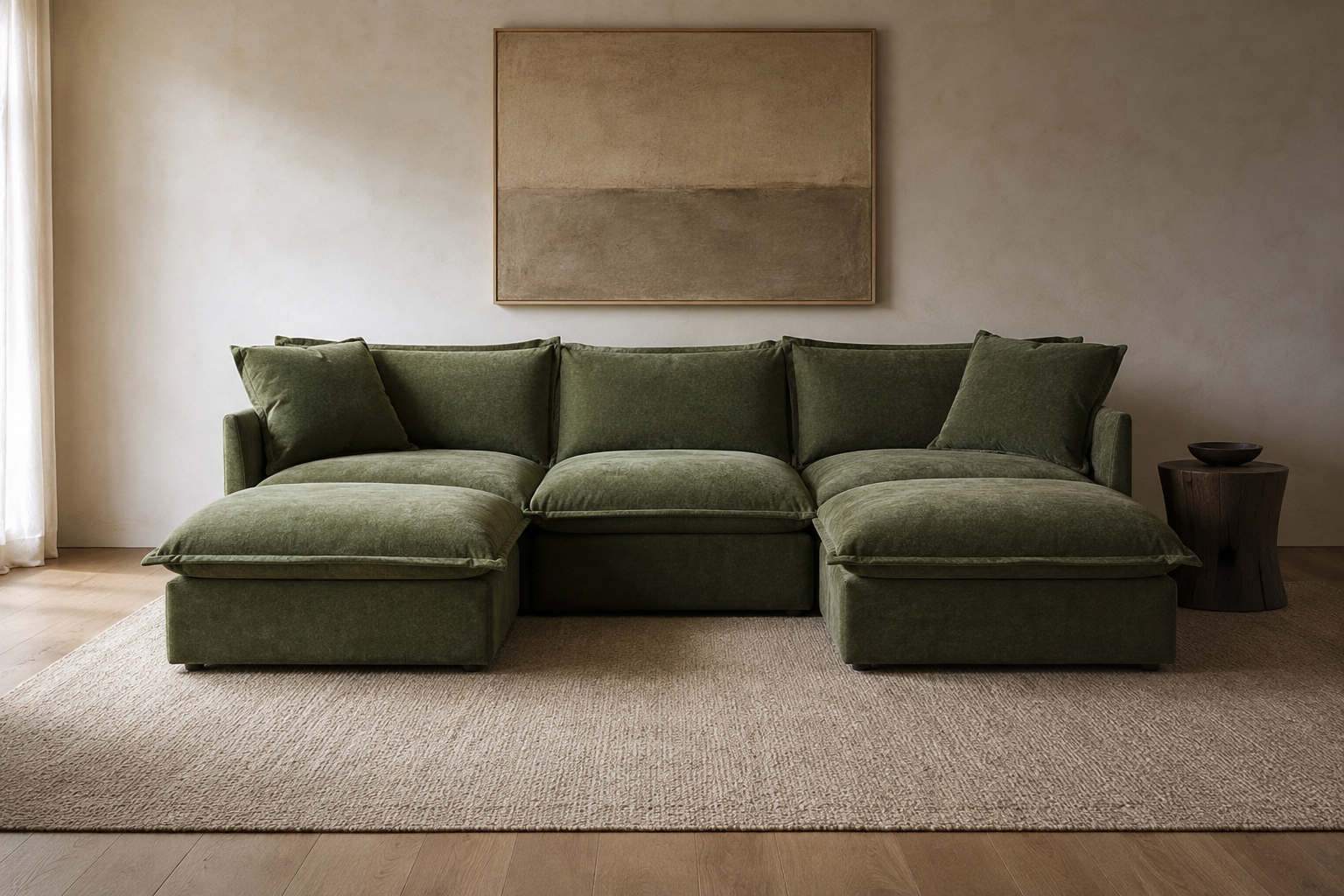
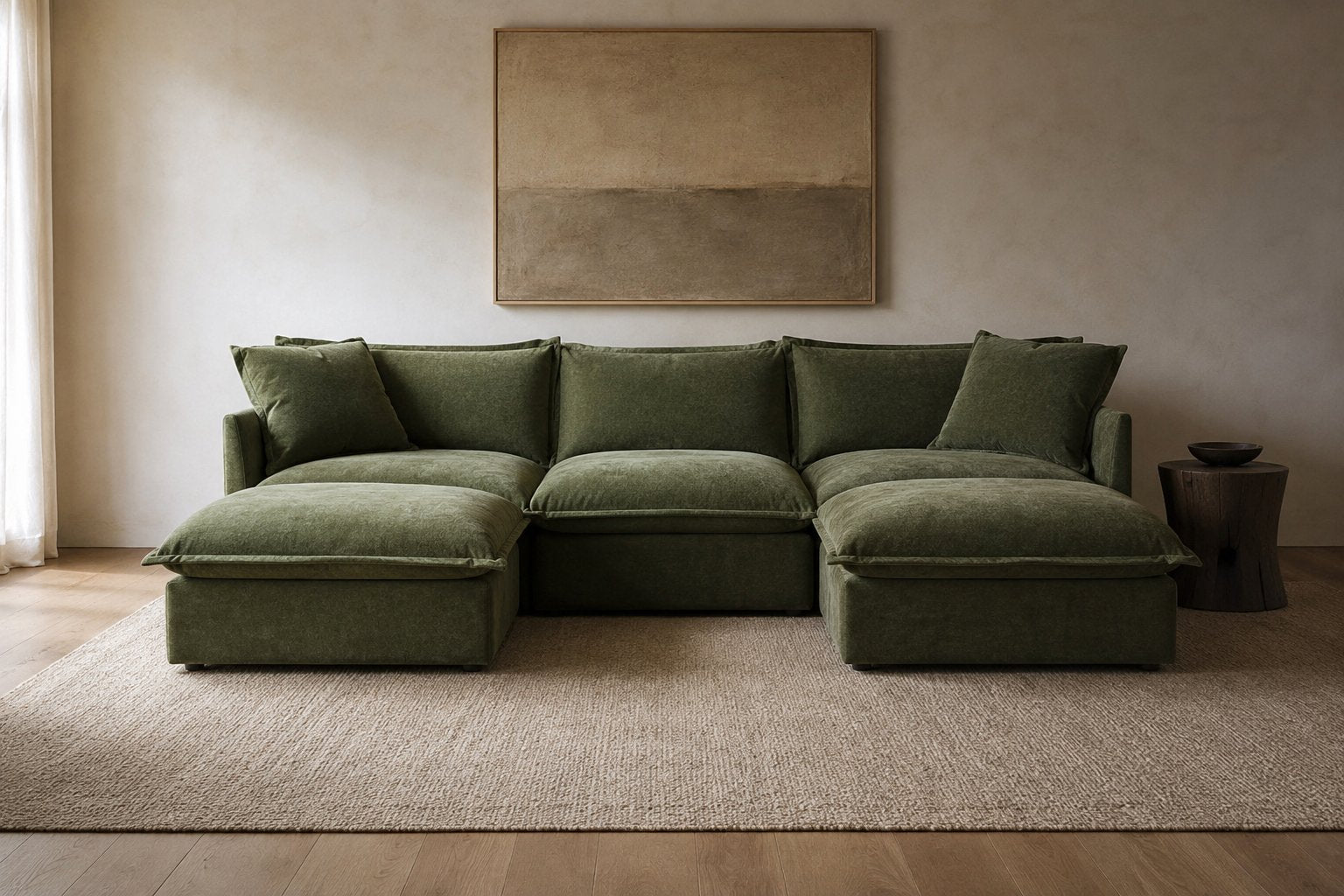
Add an ottoman if you want to create a chaise-style setup, stretch out while watching TV, use the couch more like a daybed, rearrange your living room layout over time, or add extra casual seating when guests come over.
The biggest benefit is flexibility. A traditional sectional locks you into one orientation. A boneless couch with an ottoman lets you move the lounge piece from left to right, place it in front of the couch, or separate it entirely when you need more floor space.
Step 4: Pick the Right Style: Structured or Soft
At Two Seventy Nine, the boneless couch collection includes two main styles: Hudson and Seneca. Both are built around soft memory foam comfort, but they have different personalities.
Choose Hudson If You Want a More Structured Look
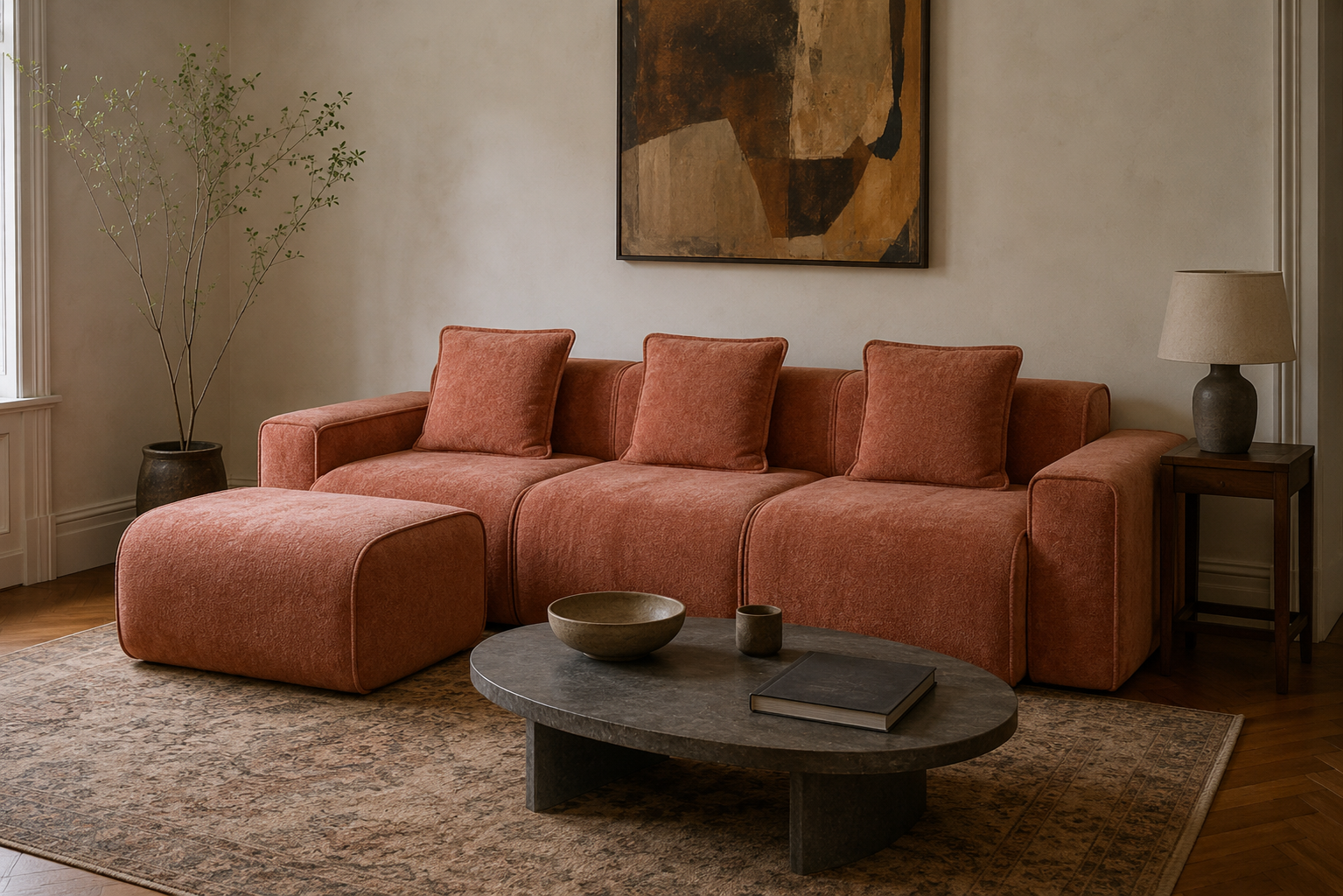
The Hudson Boneless Couch has a cleaner, more tailored silhouette. It still gives you the soft, frame-free comfort of a boneless couch, but the overall look is more structured and architectural.
Hudson is the better choice if you want a more polished living room look, texture from corduroy upholstery, and a couch that feels soft but still visually grounded.
If you are worried that a boneless couch might look too slouchy, Hudson is probably the safer choice.
Choose Seneca If You Want a Softer, More Sculptural Look
The Seneca Boneless Couch has a softer, more rounded silhouette. It feels plush, curved, and relaxed, with a smoother visual profile.
Seneca is the better choice if you want a more relaxed lounge feel, a softer curved shape, a velvet finish, and a cozy sculptural look.
If Hudson is the cleaner, more structured version of a boneless couch, Seneca is the softer and more relaxed version.
Step 5: Think About Seat Height
One concern people have with boneless couches is that some versions sit too low to the ground. That can look cool in photos, but it is not always practical for everyday use.
When comparing options, pay close attention to seat height. A couch that is too low can be annoying if you want something that feels like a real living room sofa rather than a floor cushion.
This is one reason the Hudson and Seneca styles are designed to feel closer to standard sofa height. The goal is to keep the soft, lounge-friendly feel of a boneless couch while still making it easy to sit down and stand up.
Step 6: Match the Couch to Your Space
A boneless couch can work in a lot of rooms, but the right configuration depends on the space.
For a studio apartment, choose a 2-seater or 2-seater with ottoman. Keep the layout flexible and avoid blocking the natural walking path through the room.
For a one-bedroom apartment, a 2-seater with ottoman or a 3-seater is usually best. If the living room is narrow, skip the larger sectional feel and keep the layout clean.
For a standard living room, a 3-seater boneless couch is usually the strongest choice. Add one ottoman if you want the option to lounge without committing to a full sectional.
For a family room or media room, go larger. A 4-seater or 3-seater with two ottomans can create the kind of soft, casual seating that makes everyone want to hang out in the room.
For a bedroom or guest room, a 2-seater works well as a soft secondary seating area. It gives the room a relaxed lounge feel without making it look crowded.
Step 7: Choose a Color That Works Long Term
Boneless couches already have a bold shape, so color matters. If you want the couch to feel timeless, choose a neutral that works with your floors, rugs, and walls.
Good neutral choices include camel for warmth, cream for a soft and airy look, black for contrast, and olive for a more earthy, design-forward feel.
If you want the couch to be the statement piece, choose a richer color. If you want it to disappear into a calm, minimal room, choose a softer neutral.
Step 8: Know the Difference Between “Affordable” and “Cheap”
A lot of people search for an affordable boneless couch, and that makes sense. The category is popular because it gives people the soft, cloud-like look without the price tag of some luxury sofas.
But affordable and cheap are not the same thing.
A cheap boneless couch may look good at first but flatten quickly, feel too low, or lose its shape. A better boneless couch should feel substantial, supportive, and comfortable enough for everyday use.
When comparing options, look for supportive memory foam, a seat height that works for daily living, durable upholstery, modular layouts that fit your space, and a shape that looks intentional rather than temporary.
The best boneless couch is not simply the lowest-priced one. It is the one that balances comfort, shape, durability, and style.
Step 9: Make Sure It Fits Through Your Space
One of the biggest advantages of a boneless couch is that it is easier to move than a traditional framed sofa. That makes it especially helpful for apartments, walk-ups, narrow hallways, and older buildings.
Still, you should measure before buying. Check your room width and depth, the wall where the couch will sit, doorways, stairwells, elevators, hallways, and tight corners.
Even though boneless couches are more flexible than rigid sofas, the final layout still needs to make sense in the room.
Step 10: Choose Based on How You Actually Sit
This might be the most important part.
If you like sitting upright with firm support, a traditional sofa may still be better for you. But if you like soft seating, deep lounging, casual comfort, movie nights, and curling up on the couch, a boneless couch is probably a strong fit.
Boneless couches are made for people who use their living room casually. They are not formal parlor sofas. They are for real life: watching TV, hanging out, reading, napping, scrolling, hosting friends, and relaxing at the end of the day.
If that sounds like how you use your space, the category makes a lot of sense.
For a deeper pros and cons breakdown, read our guide on whether boneless couches are good.
Quick Recommendations
Best for small apartments
Choose a 2-seater boneless couch or a 2-seater with ottoman.
Best everyday choice
Choose a 3-seater boneless couch. It works in most living rooms and gives you the best balance of comfort and scale.
Best for lounging
Choose a 3-seater or 4-seater with ottomans so you can create a chaise or sectional-style layout.
Best for a polished look
Choose Hudson. The cleaner silhouette and corduroy texture feel more tailored.
Best for a soft, relaxed look
Choose Seneca. The rounded shape and velvet finish feel plush and sculptural.
So, Which Boneless Couch Should You Buy?
If you want the safest all-around choice, start with a 3-seater. It is big enough to feel like a real living room sofa, but not so large that it overwhelms most spaces.
If you live in a small apartment, start with a 2-seater and consider adding an ottoman. If you are building a full media room or family room, go larger with a 4-seater or ottoman layout.
For style, choose Hudson if you want structure and texture. Choose Seneca if you want softness and curves.
The right boneless couch should feel comfortable, look intentional, fit your space, and make your living room easier to actually live in.
Ready to compare sizes, colors, and layouts? Shop the Two Seventy Nine Boneless Couch Collection.