
Article: How to Clean and Maintain a Fluffy Couch So It Actually Stays Fluffy
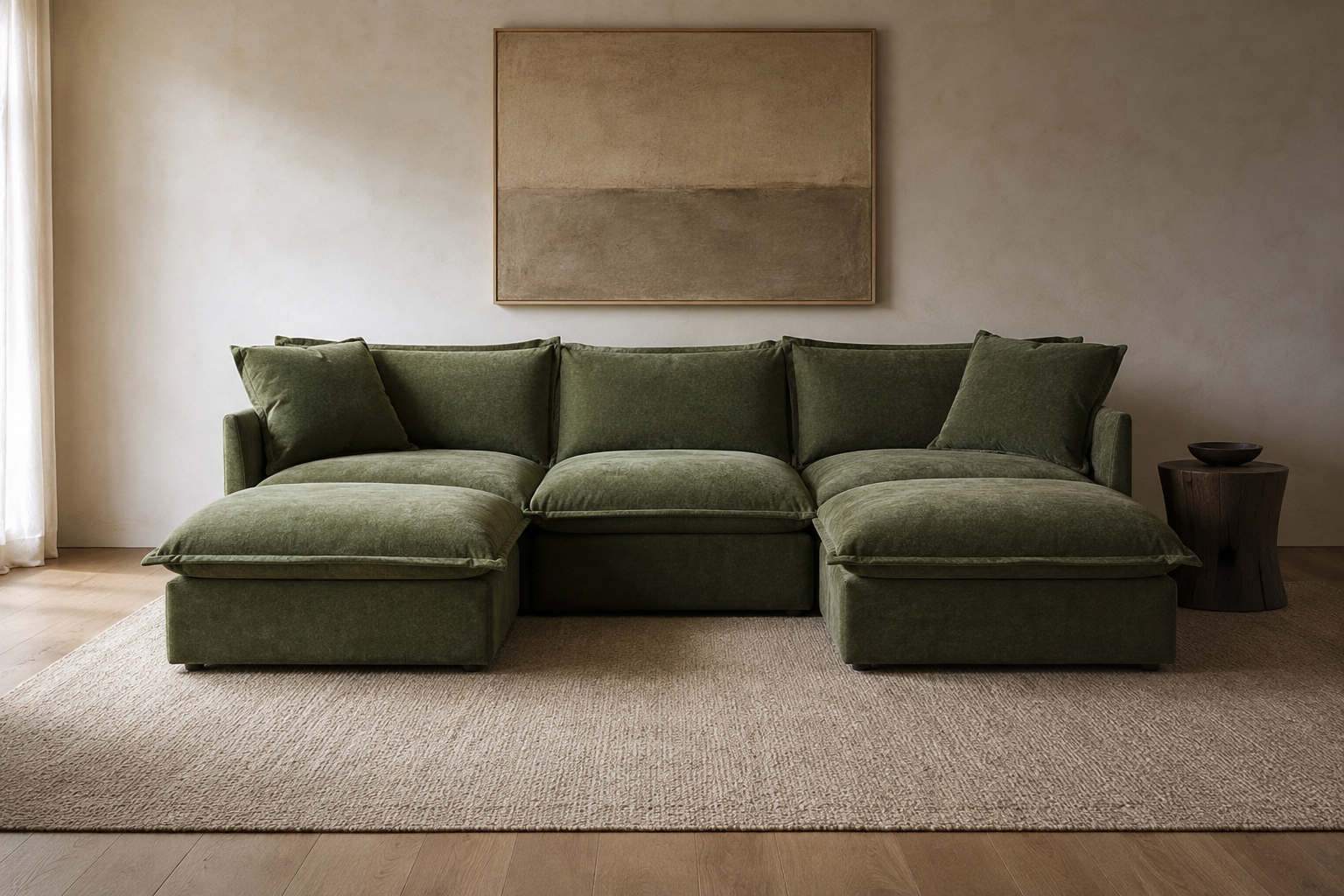
How to Clean and Maintain a Fluffy Couch So It Actually Stays Fluffy
Written by the team at Two Seventy Nine, who sell a machine washable modular couch and therefore field more questions about washing couch covers than almost anything else.
The short answer
To keep a fluffy couch looking new, rotate and flip the seat and back cushions weekly, vacuum with an upholstery attachment every one to two weeks, blot spills immediately instead of scrubbing, and wash removable covers cold on a gentle cycle then air dry them. The two things that age a fluffy couch fastest are sitting in the same spot every single day and letting the fibers mat down without ever brushing them back up. Both are free to fix, and both matter more than any product you can buy.
Why do fluffy couches go flat in the first place?
A fluffy couch looks fluffy because of trapped air, not because of the amount of material inside it. Every time you sit down you compress that air out of the fill and the fibers. If the cushion has time to recover, it springs back. If it never gets the chance, the fill takes a set and the loft is gone for good.
Three things drive that. Compression from always sitting in the same seat. Friction, which mats the surface nap and makes the fabric look tired even when the cushion underneath is fine. And moisture, which is why over-wet cleaning does more long term damage to a plush couch than the stain ever would have.
This is also why a brand new fluffy couch often arrives looking slightly deflated. Most plush couches ship compressed. The fill needs time and air to reach full loft. On our own couches that takes about 48 hours, and the single most common worry we hear in the first week turns out to be a cushion that simply has not finished expanding yet.
How often should you actually maintain a fluffy couch?
Most fluffy couch care fits into about ten minutes a week. Here is a realistic schedule rather than an aspirational one.
| How often | What to do | Time |
|---|---|---|
| Weekly | Rotate and flip seat cushions, chop and knead back cushions back into shape | 2 minutes |
| Every 1 to 2 weeks | Vacuum with an upholstery attachment, including the crevices | 5 minutes |
| Monthly | Brush the nap back up with a soft brush, check for pilling | 5 minutes |
| Every 3 to 6 months | Wash removable covers, or deep clean fixed upholstery per the care code | An afternoon |
| Immediately | Blot spills, always before they dry | 1 minute |
If you only do one of these, make it the weekly rotation. It is the highest return per minute of anything on this list.
How do you re-fluff couch cushions that have gone flat?
You re-fluff a cushion by getting air back into the fill and then letting the fibers hold it. The order matters.
- Rotate and flip. Swap the end cushion with the middle one and turn each over. This alone redistributes months of uneven wear.
- Chop and knead. Hit the back cushions from both sides with the flat of your hands, then chop down the middle. This breaks up compacted clumps of fill, which is especially useful with down and shredded foam.
- Brush the surface. A soft bristle brush or a clean pet slicker brush lifts matted fibers back up. Always brush in one direction, following the nap, not back and forth.
- Steam, carefully. A garment steamer held six to eight inches away relaxes flattened fibers so they can expand. Let the cover dry fully before sitting on it.
What will not work is buying a firmer cushion insert. If the couch felt right when it arrived, the fill is not the problem. The air is.
How do you vacuum a fluffy couch without damaging the fabric?
Use the upholstery attachment, the flat one with the fabric strip on the underside, and use the crevice tool along the seams. Work in one direction with the nap rather than scrubbing back and forth.
The mistake worth avoiding is running a motorized brush roll directly over plush fabric. The spinning bristles create exactly the friction that causes pilling, and on high pile fabrics they can pull fibers loose. If your vacuum has no way to turn the brush roll off, use a handheld instead.
For pet hair specifically, a rubber squeegee or a slightly damp rubber glove dragged across the surface will gather far more hair than any vacuum. Do that first, then vacuum.
What do the W, S, WS and X cleaning codes mean?
Every piece of upholstered furniture sold in the US carries a cleaning code on a tag, usually under the seat deck or inside a cushion cover. It tells you what liquid the fabric can safely tolerate. Check it before you put anything wet on your couch.
| Code | What it means | What to use |
|---|---|---|
| W | Water based cleaners only | Distilled water, or water with a drop of clear dish soap |
| S | Solvent based cleaners only | Dry cleaning solvent. Water will leave rings |
| WS | Either water or solvent is safe | Start with water, escalate only if needed |
| X | Vacuum only | No liquid at all. Professional cleaning for anything serious |
One detail people miss: on a couch with removable covers, the care code applies to the cover, and the cushion insert underneath usually has its own separate instructions. Washing the cover is not the same as washing the couch.
How do you spot clean a fluffy couch?
Blot, never scrub. Scrubbing pushes the stain deeper into the fill and permanently mats the surface fibers together, which leaves a dull patch that is more noticeable than the original spill.
- Lift as much of the spill as possible with a clean white cloth, pressing straight down.
- Check the care code before introducing any liquid.
- Use distilled water rather than tap water. Minerals in tap water are what cause those faint rings after everything dries.
- Work from the outside of the stain inward, and feather the damp edge outward so there is no hard line.
- Blot dry, then let it air dry completely before sitting down. A fan speeds this up considerably.
Always test on a hidden area first, ideally the back of a cushion or the underside of an arm cover.

Can you put fluffy couch covers in the washing machine?
Sometimes, and the answer depends entirely on the couch. Plenty of couches marketed as washable have covers that are technically removable but still dry clean only. Read the tag before you assume.
When covers are genuinely machine washable, the rules are consistent across brands:
- Wash cold, on a gentle or delicate cycle
- Turn covers inside out to protect the nap from abrasion
- Wash covers together so colors age evenly, and do not overload the drum
- Skip fabric softener, which coats fibers and flattens plush texture over time
- Air dry. Heat is what shrinks covers and, on synthetic plush, can melt the fluff outright
- Put covers back on while very slightly damp. They stretch into place more easily and finish drying to a better fit
This is the part of couch ownership we get asked about most, because the Big Fluffy Couch is built around removable covers on every seat, back and ottoman. The practical upside is not that washing is fun. It is that one ruined cushion cover is a laundry cycle rather than a new couch.
How do you fix pilling and matting?
Pilling is friction damage, not a defect. Loose fibers tangle into small balls on the surface, and it shows up first exactly where people sit and where arms rub.
A rechargeable fabric shaver removes pills cleanly. Run it lightly across the surface without pressing down, since pressure lets the blade catch the base fabric underneath. Vacuum up the debris afterward so it does not work back into the weave.
Matting is different and more fixable. The fibers are not damaged, just crushed flat. Brush with the nap first, then steam from a few inches away, then brush again once the fabric has cooled. Most matted plush comes back further than people expect.
What are the best materials for a fluffy, comfortable couch?
The best materials for a puffy, comfortable couch are a high resilience foam core wrapped in a soft outer layer of down or poly fiber, upholstered in a fabric with enough nap to look soft and enough durability to survive being sat on. The fill decides how it feels. The fabric decides how it looks and how it ages.
The fill, which is what makes it puffy
- Down and feather blend. The most luxurious sink-in feel and the softest look. It also requires the most fluffing, because down compresses easily and does not spring back on its own.
- Down alternative and poly fiber. Blown in polyester microfiber mimics down closely at lower cost, without the allergen concerns. It clumps over time and needs kneading rather than fluffing.
- High resilience foam core with a soft wrap. The most practical option for daily use. The foam stops the seat bottoming out while the wrap gives the rounded, overstuffed look. This is what we use, with no built in springs, because springs are the part that eventually starts to sag and squeak.
- Memory foam. Excellent contouring and pressure relief, slower to rebound, and warmer to sit on than foam or fiber.
The fabric, which is what you actually touch
| Fabric | Why it works on a fluffy couch | Cleaning reality | Best for |
|---|---|---|---|
| Chenille | Deep soft nap, drapes beautifully over rounded cushions, reads as warm and cozy | Vacuum with the nap, brushes back up well after matting | Lounging, family rooms, maximum softness |
| Corduroy | Structured ribbing holds its shape and hides wear along the ribs | Very forgiving, brush along the wale not across it | Households wanting texture with less visible wear |
| Boucle and teddy | Looped yarn creates a visually puffy, sculptural surface | The most pill prone of the group, and loops can snag on claws | Modern, minimalist rooms without pets |
| Velvet | Dense pile with a rich sheen, extremely soft | Shows crushing and water marks readily, needs regular brushing | Formal spaces, lower traffic |
| Performance microfiber | Engineered to resist stains while staying soft | The easiest to clean, though it can feel less natural | Homes with kids or pets |
| Textured linen blend | Breathable and relaxed, crinkles into a lived in look | Wrinkles by design, stains more readily than synthetics | Coastal and farmhouse rooms |
If you are reading product listings, the terms actually worth looking for are removable covers, high resilience or high density foam, seat depth over 24 inches, and a stated frame weight rating. Those tell you more about how a fluffy couch will hold up than any adjective in the product name.
Which fluffy couch fabric is easiest to live with?
Chenille and performance microfiber are the easiest fluffy couch fabrics to live with day to day, and corduroy is close behind. All three have enough surface texture to disguise ordinary wear, and all three recover well from brushing.
Boucle is the one to think twice about with pets. The loops that give it that sculptural look are the same loops a claw catches, and a pulled loop cannot be brushed back the way a crushed nap can.
Colour matters more than people expect too. Mid tones in olive, camel and mocha hide daily life far better than either bright white or true black, which show lint and pet hair respectively.
What actually shortens a fluffy couch's life?
In rough order of how much damage they do:
- Always sitting in the same seat. The single biggest cause of a couch that looks old on one end and new on the other.
- Direct daily sunlight. UV weakens fibers and fades dyes unevenly. A couch under a south facing window ages visibly faster.
- Machine drying synthetic covers. Heat shrinks covers so they no longer fit, and on plush synthetics it can permanently flatten the pile.
- Scrubbing stains. Turns a small spot into a permanent dull patch.
- Over wetting during cleaning. Moisture that reaches the fill takes days to dry and can leave odor behind.
- Motorized vacuum brush rolls. Slow, cumulative pilling that people rarely trace back to the vacuum.
Notice that five of the six are free to avoid. Fluffy couch maintenance is much more about what you stop doing than what you buy.
Frequently asked questions
How often should I wash removable couch covers?
Every three to six months for a normal household, and more often for the seat covers than the back or arm covers, since they take most of the contact. Washing more frequently than that shortens cover life without making the couch meaningfully cleaner.
Will washing shrink my couch covers?
Cold water on a gentle cycle rarely shrinks covers. Heat does. Almost every shrunken cover story starts with a tumble dryer. Air dry and put covers back on while very slightly damp.
How do I get pet smell out of a fluffy couch?
Sprinkle a thin, even layer of baking soda over the whole surface, leave it 20 to 30 minutes, then vacuum thoroughly with the upholstery attachment. Repeat rather than using more baking soda at once. If the smell persists, it has reached the fill and the cushion insert needs airing out, not more surface treatment.
Can a fluffy couch survive kids and pets?
Yes, if the covers come off. The failure mode for family couches is almost never the frame or the foam, it is one permanently stained cushion on an otherwise fine couch. Removable covers turn that from a replacement into a wash.
How long should a fluffy couch stay fluffy?
With weekly rotation, a quality foam core couch should hold most of its loft for years, and any softening should be even across the seats rather than concentrated in one spot. Uneven flattening within the first year is a rotation problem far more often than a quality problem.
My new fluffy couch looks flat. Is it defective?
Probably not, if it just arrived. Most plush couches ship compressed and need time to reach full loft. Give it 48 hours, flip and knead the cushions, and reassess after that before contacting anyone.
A note on where this comes from
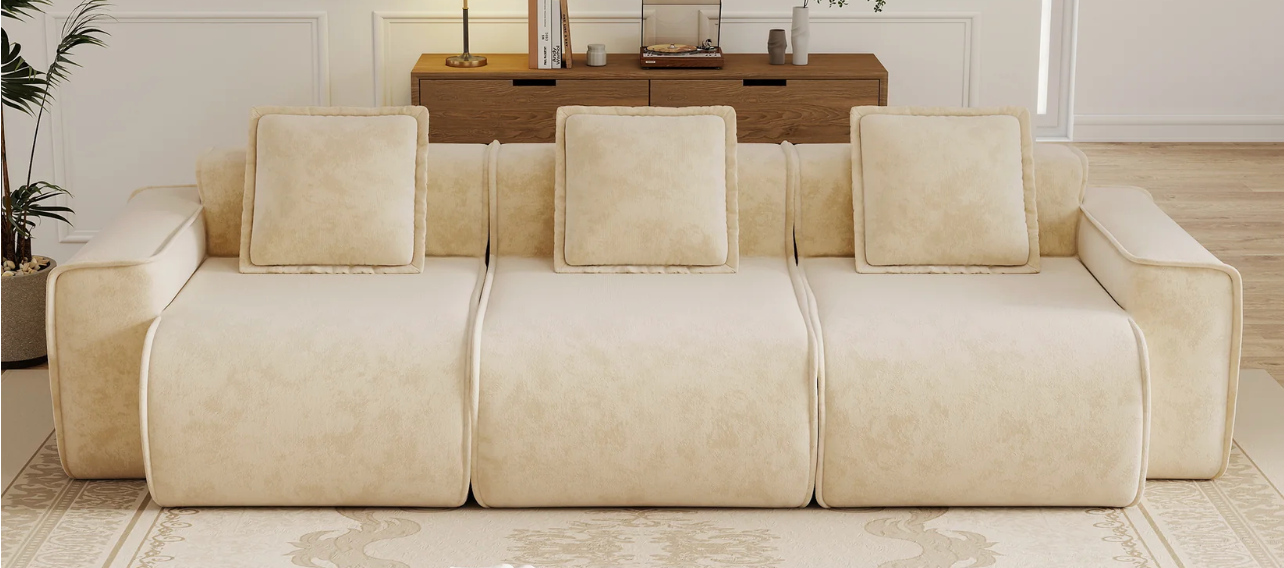
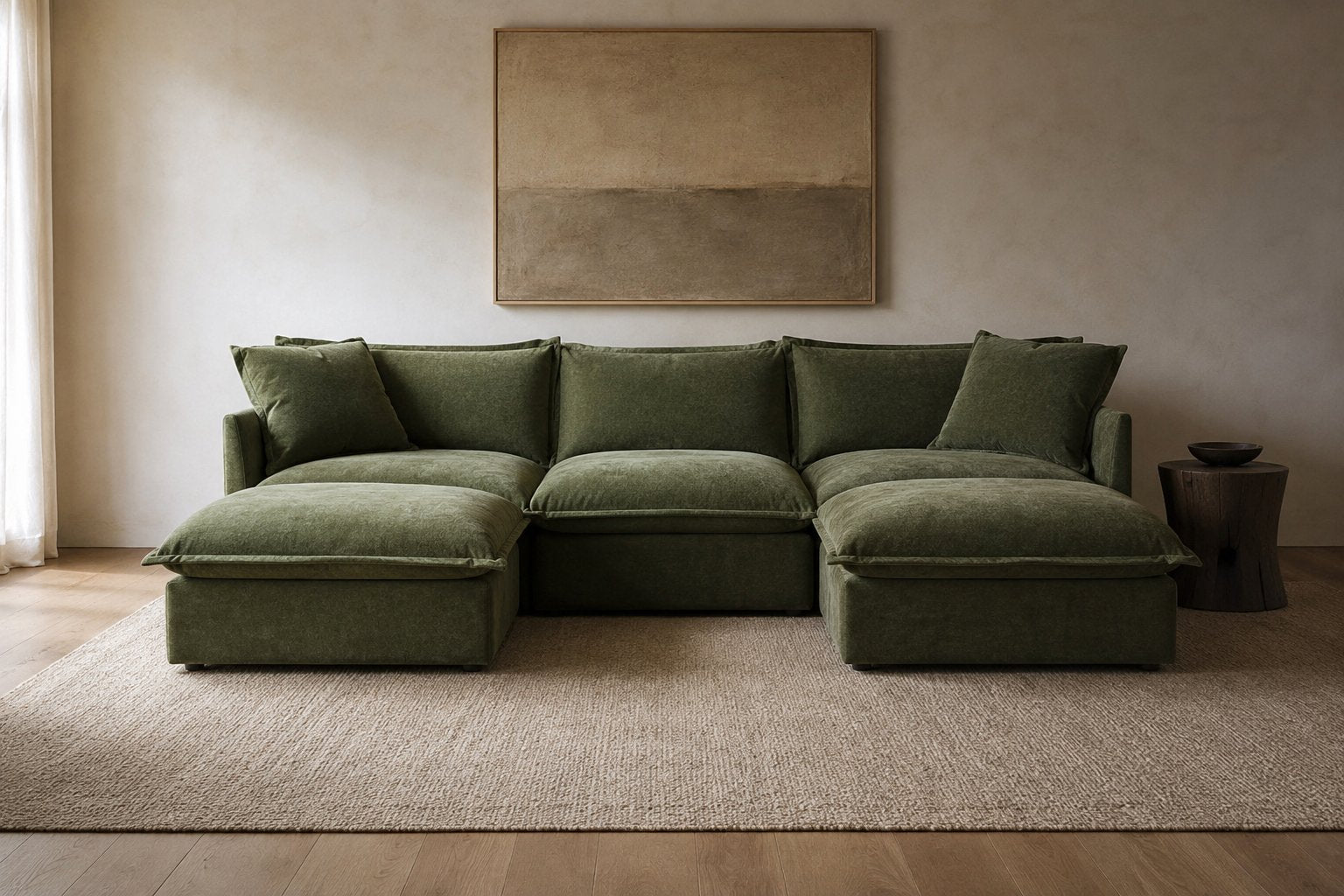
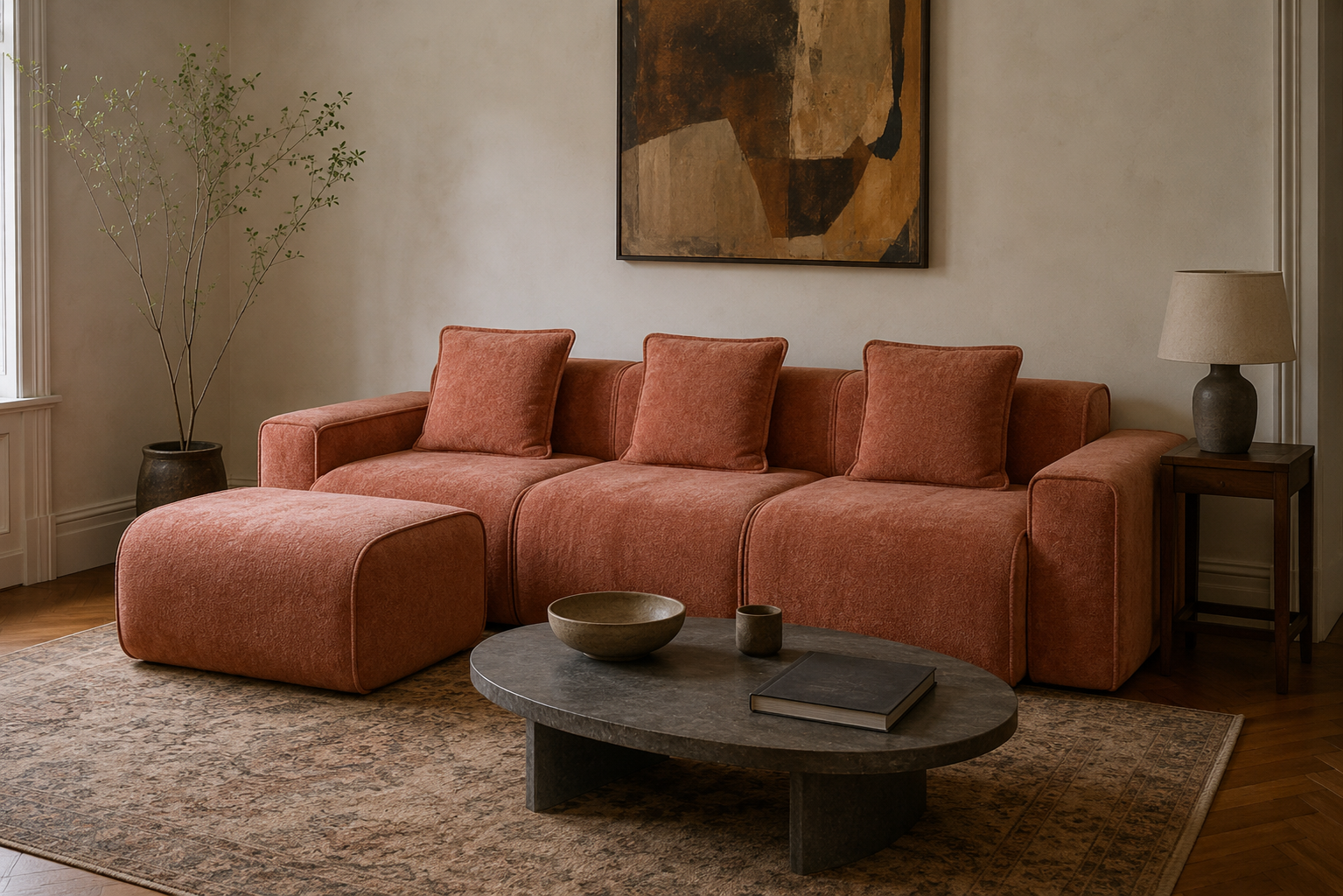
We make the Big Fluffy Couch, a modular machine washable couch available in chenille and corduroy across two, three and four seat configurations, with removable covers on every piece and a wood frame rated to 300 lbs per seat. We have an obvious interest in you buying one. We have a much stronger interest in you keeping whatever couch you own looking good, because a customer whose couch still looks new after two years is the only marketing that actually compounds.
If you have a care question this guide did not answer, ask us. The answers end up here.