
Skip to content

Cart

Your cart is empty

Office Chair Mat

An office chair mat is a hard sheet laid under a desk chair so the castors roll freely and the floor beneath is protected. Office chair mats at Two Seventy Nine run from 36 by 36 inches up to 60 by 46 inches, in clear vinyl or tempered glass, and each listing names the floor it is built for.

Office Chair Mat

This collection is empty

Continue shopping

Carpet or hard floor, and why the wrong one fails

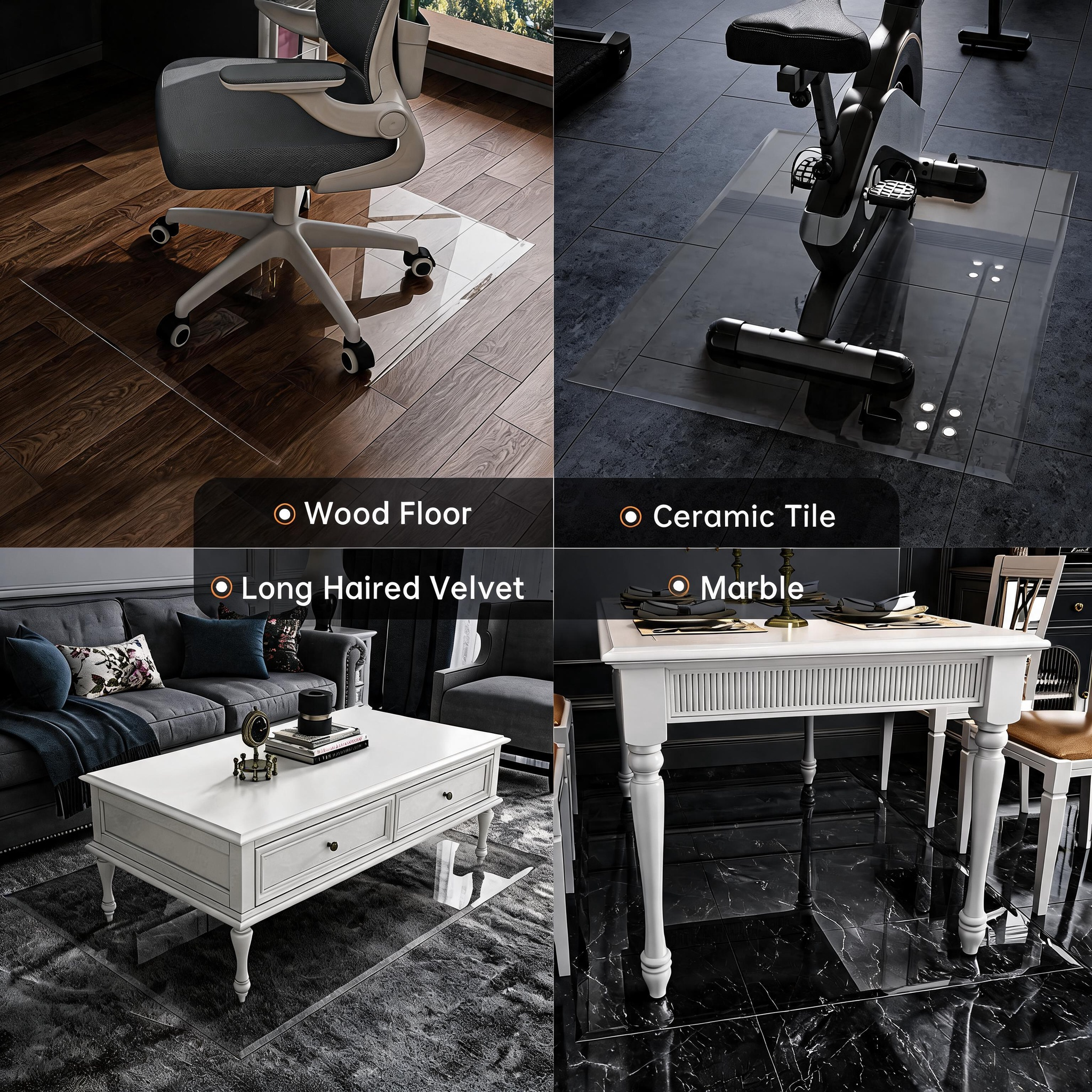
The floor a mat is built for is the specification that decides whether the purchase works, and the two are not interchangeable. A carpet mat has a gripping underside, usually short spikes or a textured back, that bites into the pile and stops the mat wandering as the chair moves. Put that same mat on hardwood or vinyl and the grippers press against a hard surface with nothing to bite, which can mark the floor and leaves the mat sliding. A hard-floor mat has a smooth back and a light texture that holds by contact instead, and laid on carpet it floats on the pile, flexes under the castors and cracks along the flex line. Every listing here states the surface it is made for, and it is the first line to read.

Reading the floor you actually have

Carpet is graded by pile depth and it changes what a mat has to do. Low pile, the flat commercial-weight carpet common in offices, takes a standard carpet mat. Deep or plush pile needs a thicker mat with longer grippers, because a short gripper never reaches the backing and the mat rides on the surface. Hard floors cover hardwood, engineered board, laminate, vinyl plank and tile, and they share a requirement: nothing abrasive on the underside. If the room has a rug over a hard floor, treat it as carpet where the chair sits. Where a listing names low pile specifically, that is the limit and not a suggestion.

Vinyl and tempered glass

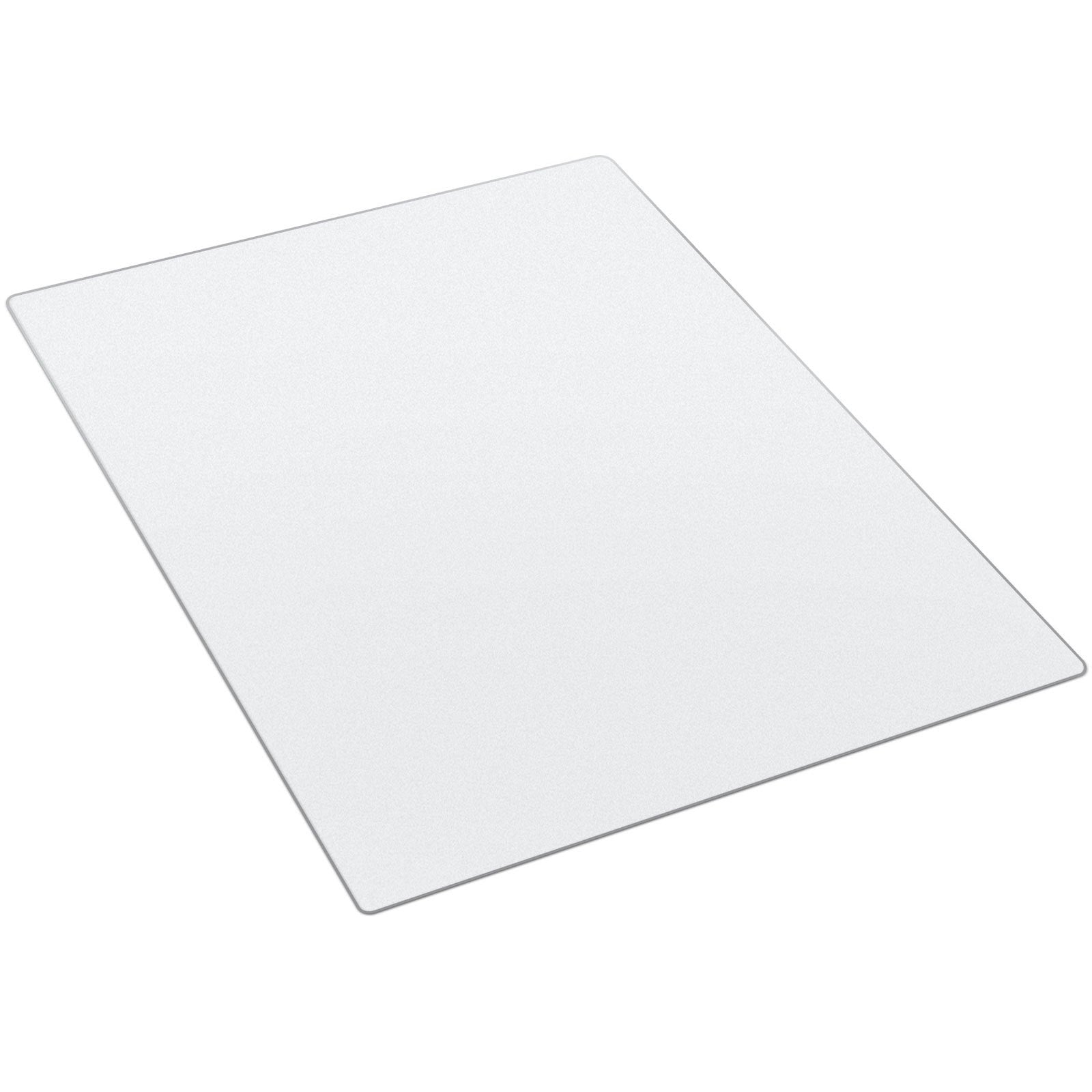
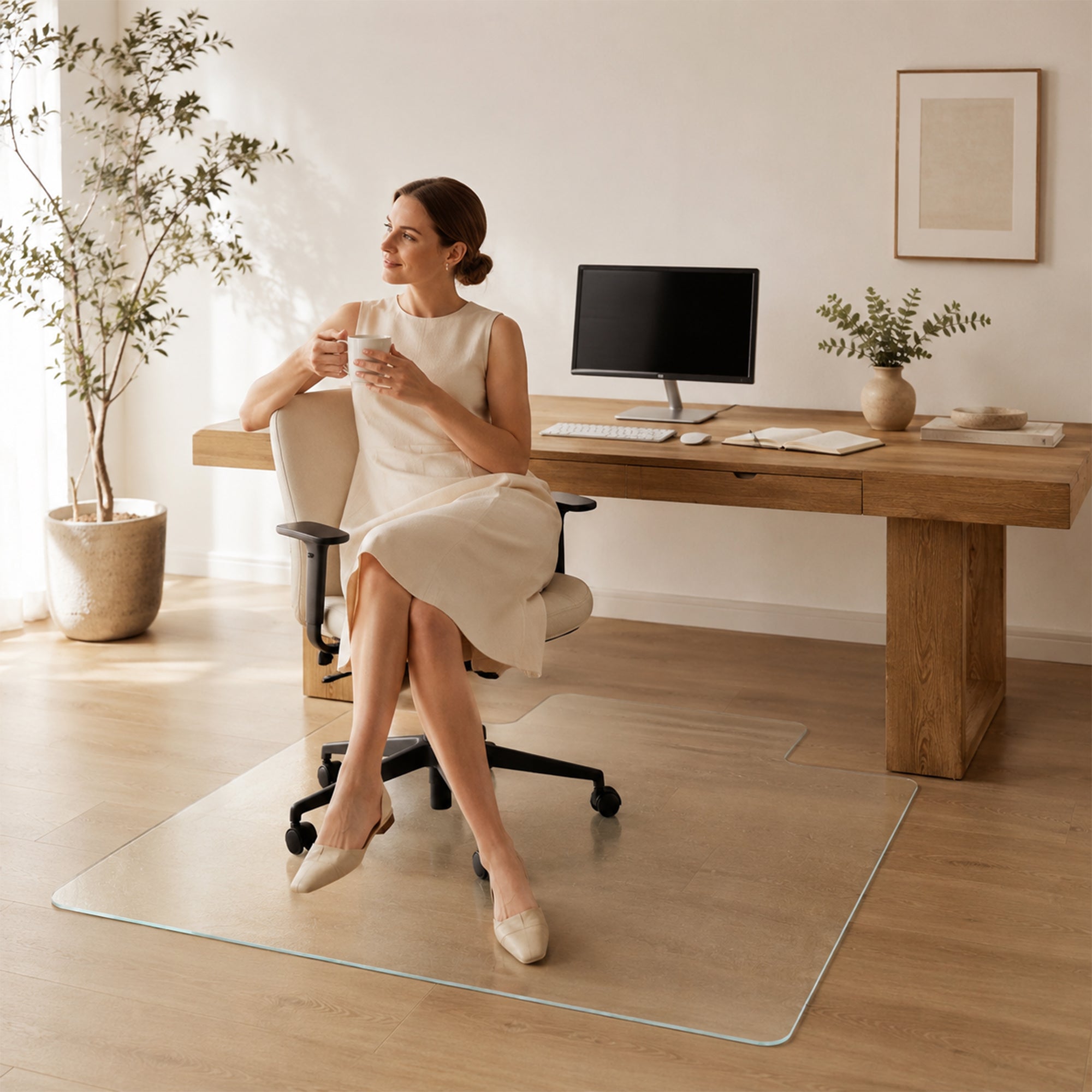
Most mats here are clear vinyl, which is light, flexes to sit flat and costs least to replace when a castor eventually wears a track in it. Several are tempered glass, which behaves differently in every respect that matters: it is rigid, so it does not dish under a castor or curl at the corner, it does not yellow, and because it holds its shape by weight rather than by grip it works on carpet and hard floors alike. That last point is why the glass mats in this range are listed for both surfaces rather than one. Glass is heavier to position and wants a flat floor under it, and the listings state a weight capacity where the manufacturer gives one.

Getting the size right

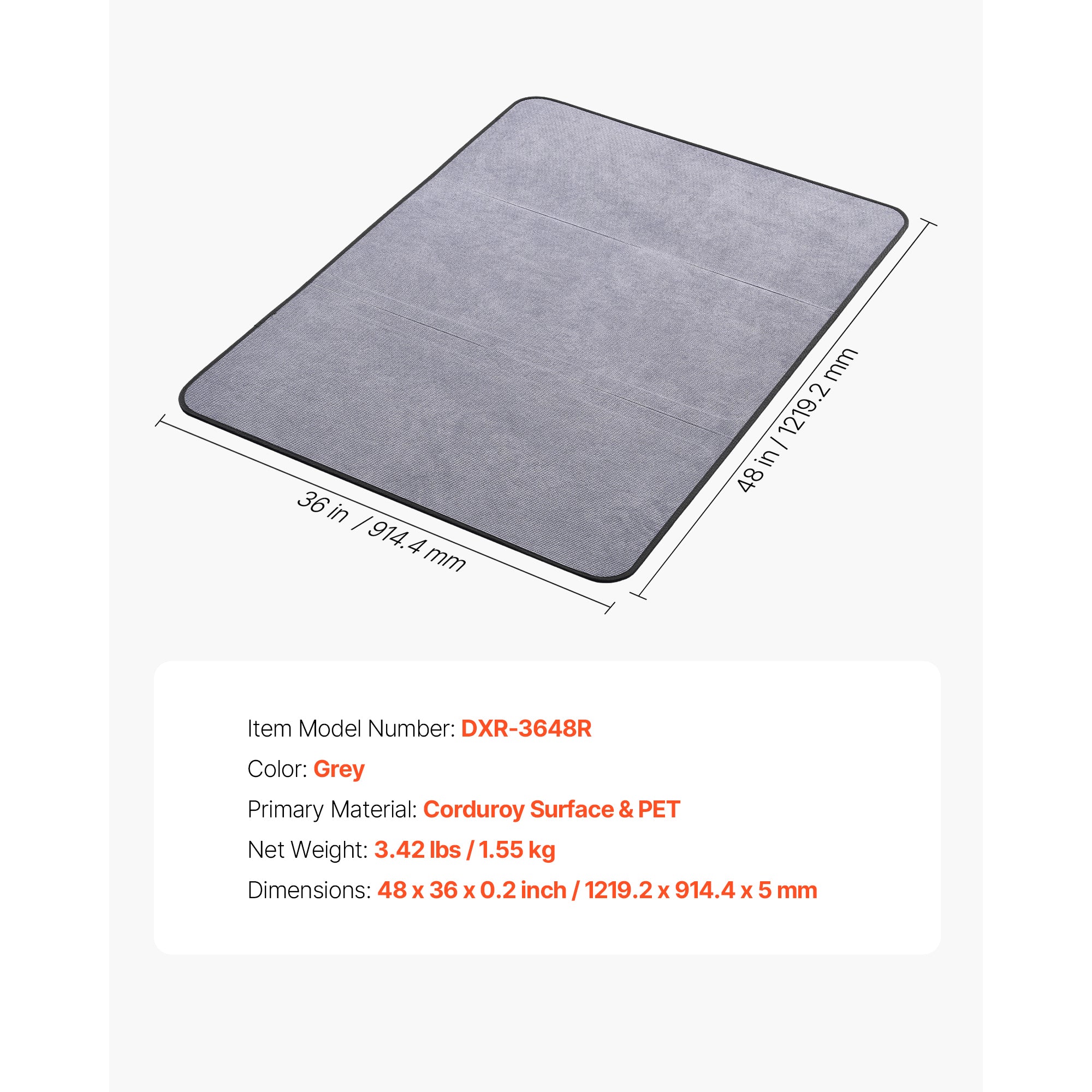
Mats here run from 36 by 36 inches to 60 by 46 inches. The measurement that matters is not the desk, it is the travel: the mat has to cover where the chair goes when you push back, turn to a side return and roll to a drawer, because a castor that drops off the edge marks the floor at exactly the point the mat was bought to protect. Measure the arc the chair actually sweeps rather than the desk footprint. Some mats in this range have a lip, a projecting tongue that reaches under the desk so the chair stays supported when pulled right in, and that shape suits a desk with a knee recess.

Keeping a mat where you put it

A mat that slides is almost always a mat on the wrong surface, so check that first. On hard floors, let a rolled mat lie flat for a day or two before judging it, because vinyl keeps the memory of the roll and lifts at the corners until it relaxes, and warmth speeds that up. Do not put a hard-floor mat over a rug to stop it moving, since the pile underneath reintroduces the flex that cracks it. Clean either type with a damp cloth and mild detergent, and keep solvents away from vinyl, which they cloud permanently.

Specifications

Size range
36 x 36 in to 60 x 46 in
Materials available
Clear vinyl, Tempered glass
Floor surfaces
Carpeted floors, Hard floors
Glass suits
Carpet and hard floors alike
Shapes available
Rectangular, With lip
Floor surface note
Stated per product. A carpet mat and a hard-floor mat are not interchangeable.
Delivery window
5 to 7 days
Free shipping
Free

Good to know

Frequently asked questions

Do you need a chair mat for carpet?
A chair mat on carpet is worth having for two reasons. Castors sink into pile, so rolling takes real effort and the chair drags rather than glides, and the repeated pressure crushes the fibres into permanent tracks. A mat spreads the load across a hard surface so the chair moves freely and the carpet underneath is not compressed. On low pile the difference is noticeable, and on deep pile it is the difference between a chair that rolls and one that does not.
Can you use a hard floor chair mat on carpet?
No, and it is the most common mistake with this product. A hard-floor mat has a smooth underside meant to hold by contact with a solid surface. Laid on carpet it sits on compressible pile, so it flexes every time a castor passes over it, and vinyl that flexes repeatedly in the same place cracks along that line. Mats built for carpet have a gripping underside that anchors into the pile instead. Each listing states which surface it is made for.
Are glass chair mats good?
Tempered glass chair mats are rigid, so unlike vinyl they do not dish under a castor, curl at the corners or yellow with age, and they roll more smoothly for the same reason. Because a glass mat holds position by its own weight rather than by gripping, it suits carpet and hard floors equally, which no vinyl mat does. The trade-offs are weight, the need for a flat floor beneath, and less give underfoot.
What size chair mat do I need?
Size the mat to the area the chair travels over, not to the desk. Push back from the desk, turn to reach a side return and roll to a drawer, and the mat needs to cover all of it, because a castor dropping off the edge marks the floor at the very spot the mat was meant to protect. Mats in this range run from 36 by 36 inches to 60 by 46 inches. A mat with a lip reaches under the desk so the chair stays supported when pulled fully in.
How to keep chair mat from sliding on hardwood floors
First check the mat is built for hard floors, because a carpet mat has grippers that cannot bite into hardwood and will slide by design. If it is the right type, give a newly unrolled vinyl mat a day or two lying flat before judging it, since it keeps the memory of the roll and lifts at the corners until it relaxes. Do not place it over a rug to hold it still, as the pile underneath causes the flexing that cracks vinyl. A tempered glass mat holds position by weight instead.