

















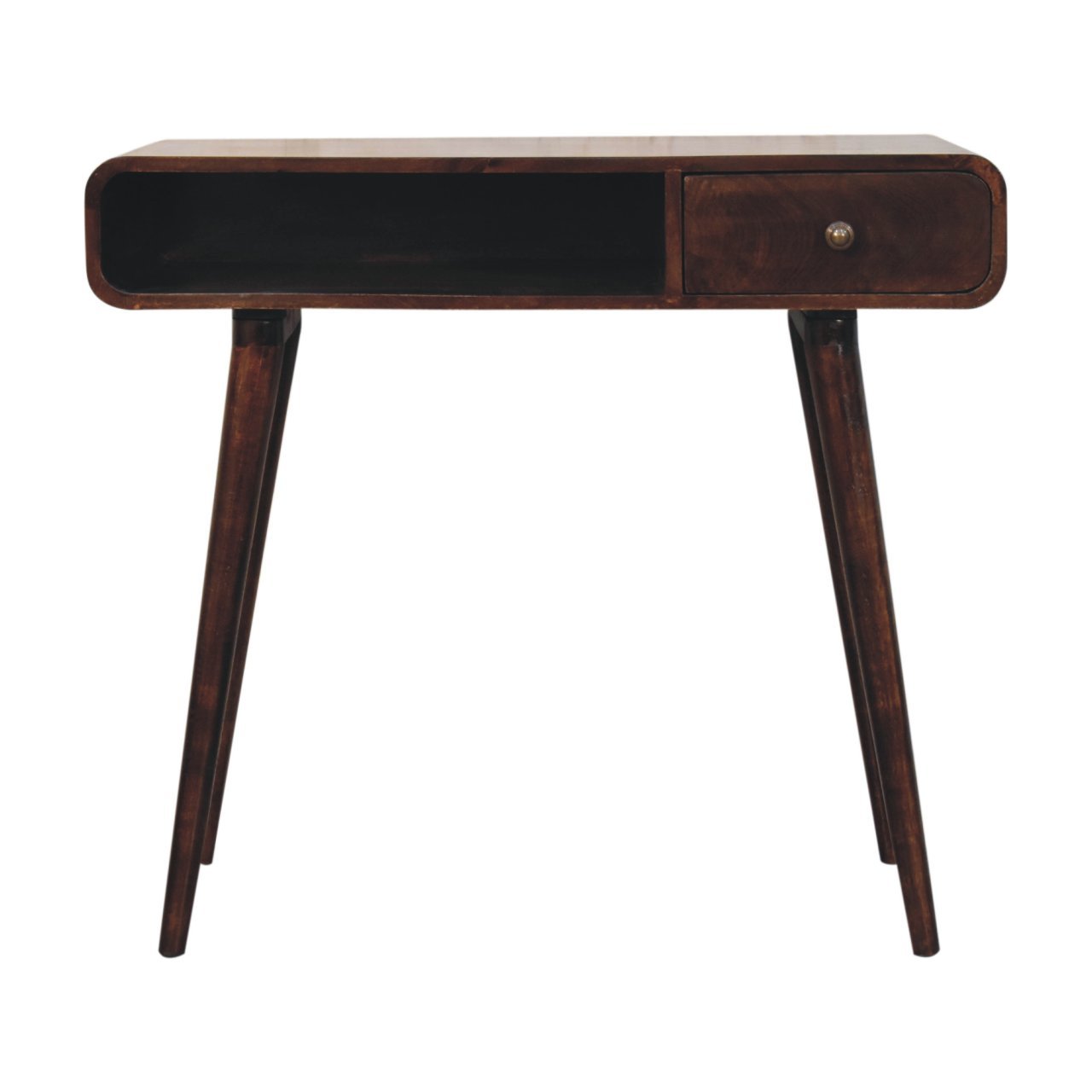
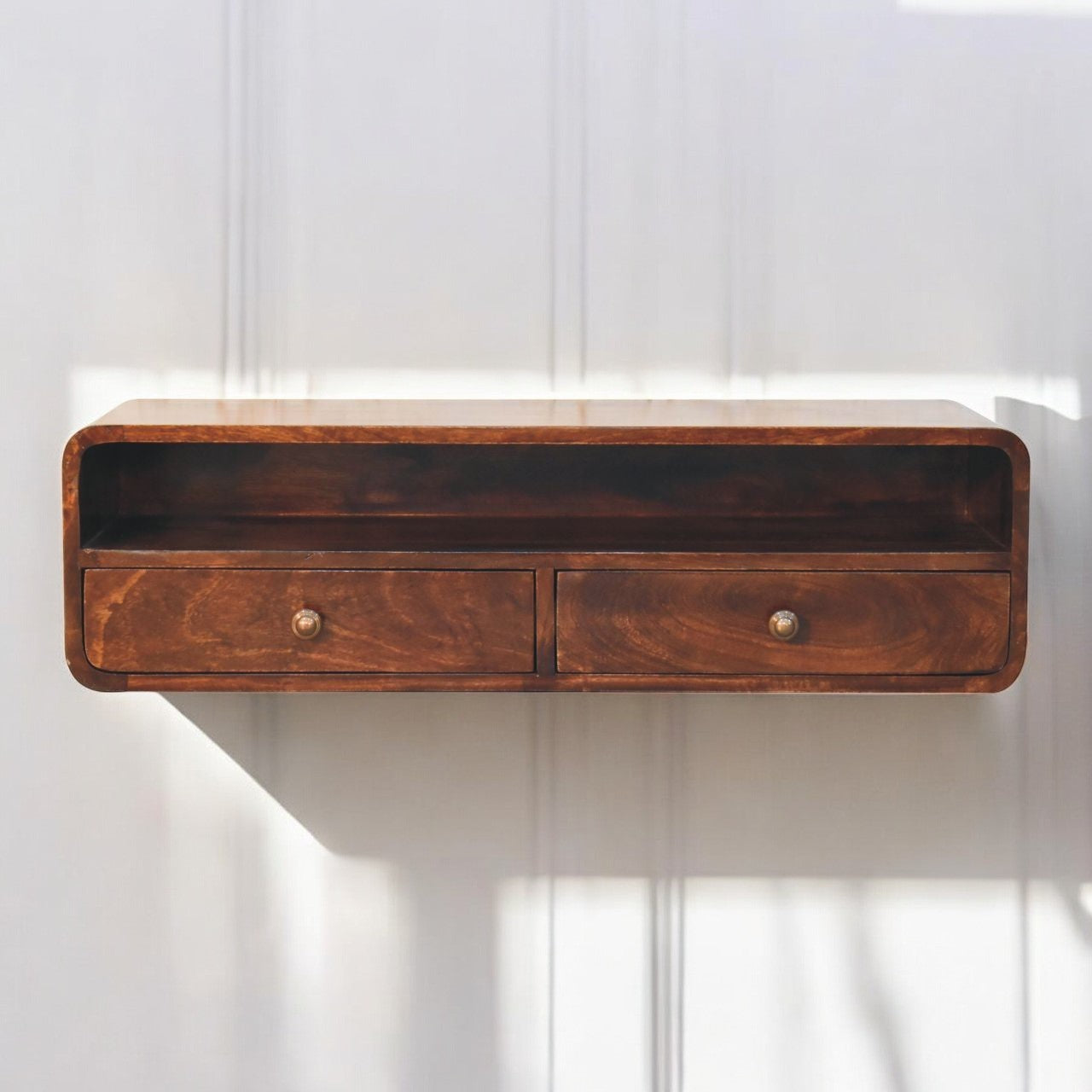


More Office Desks


More in Walnut


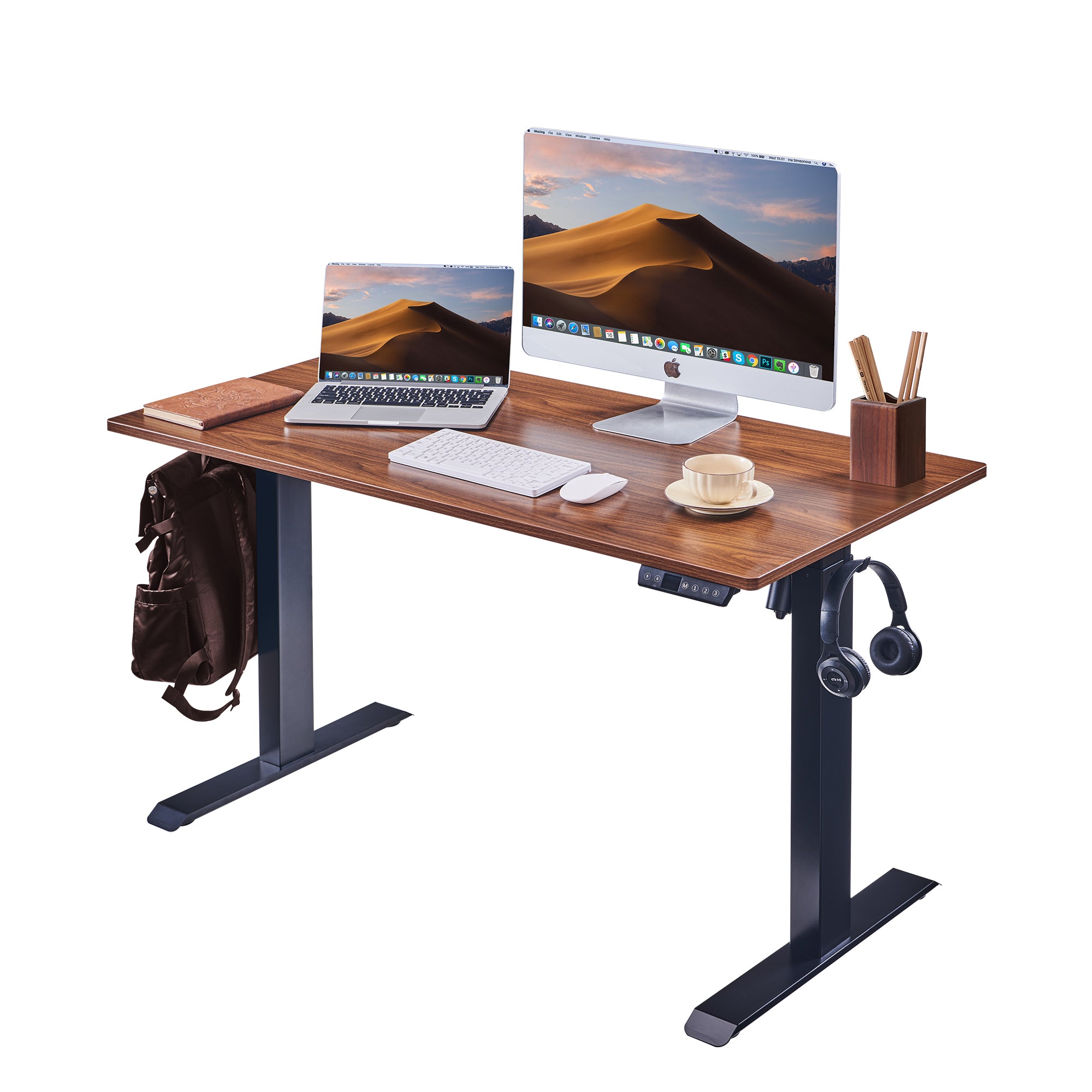
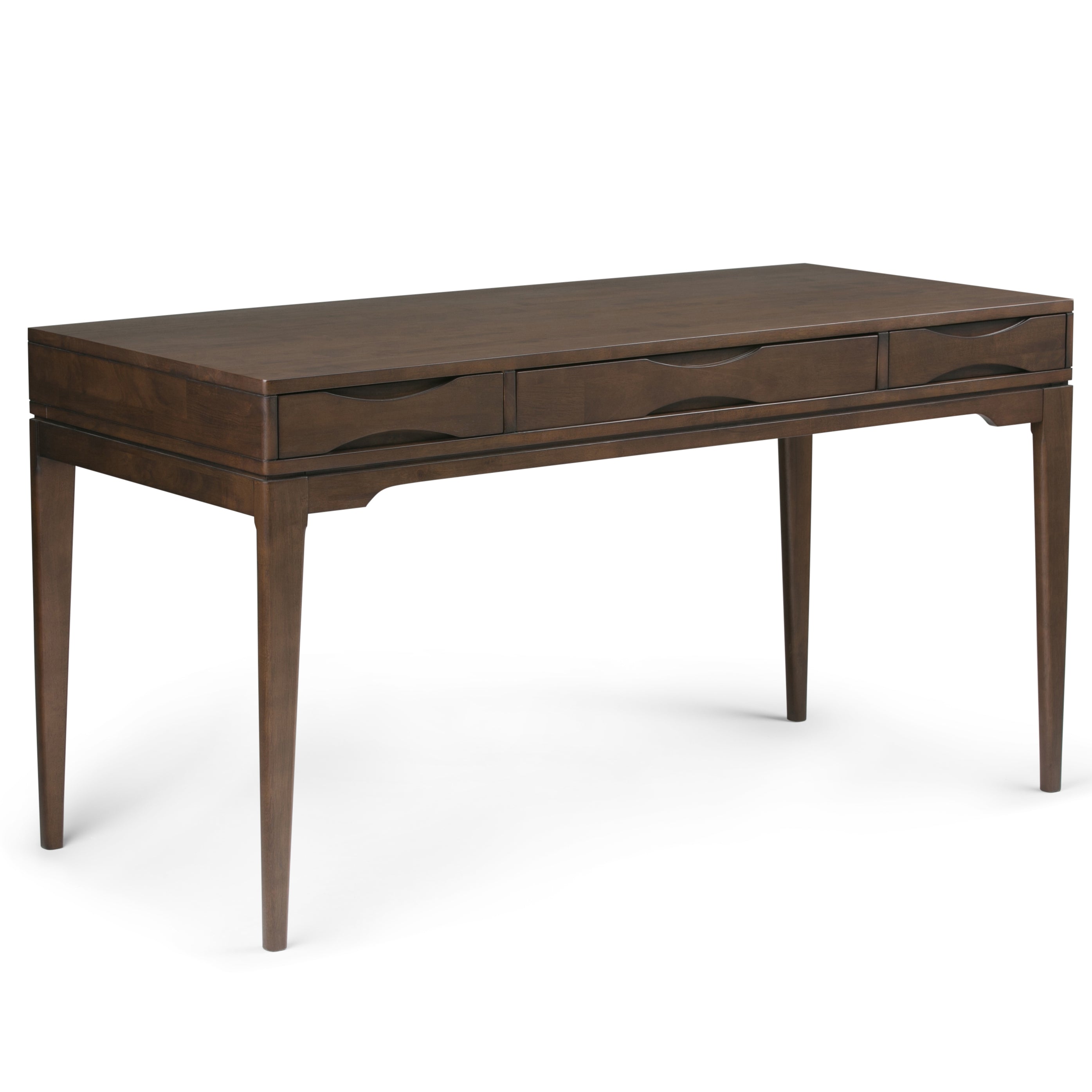
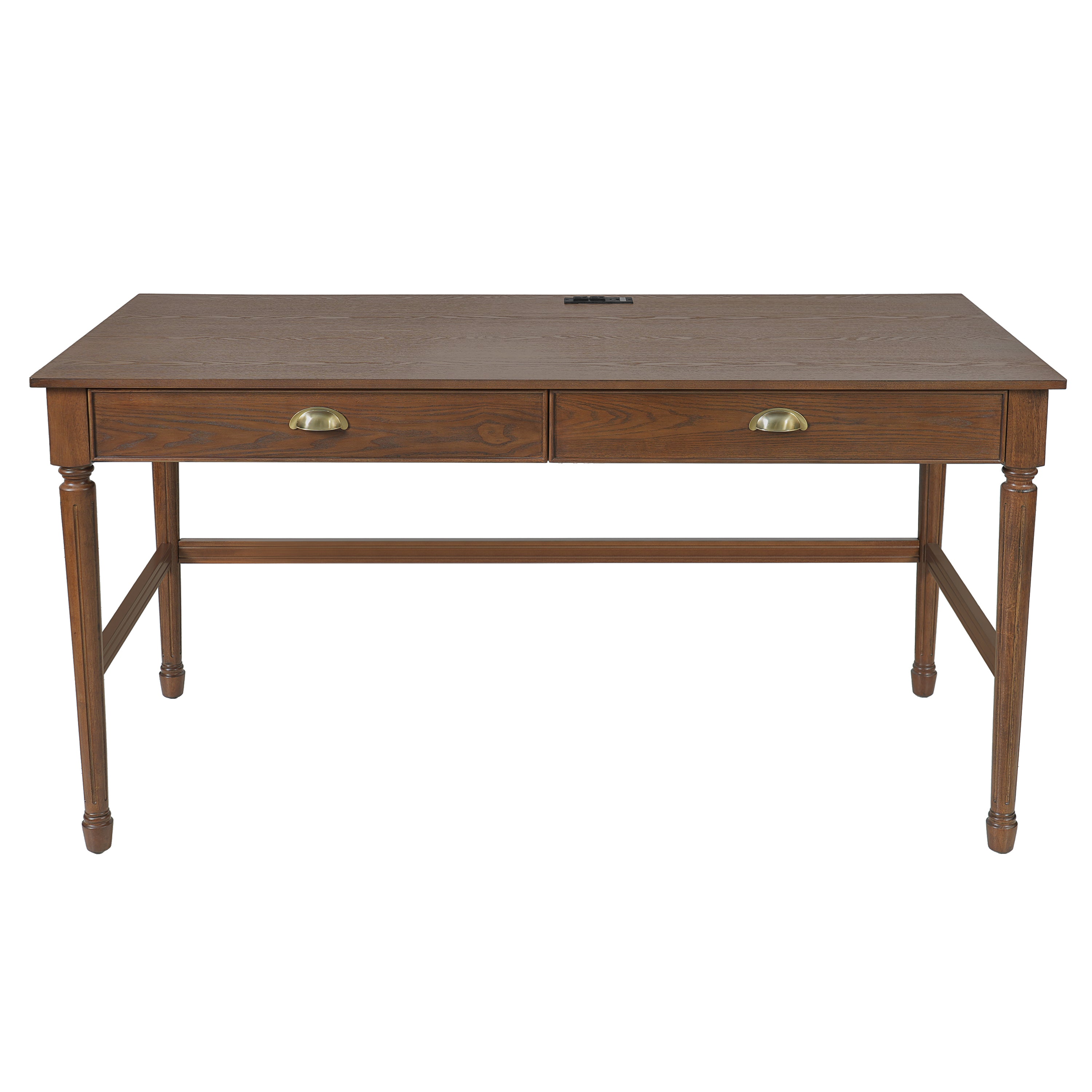
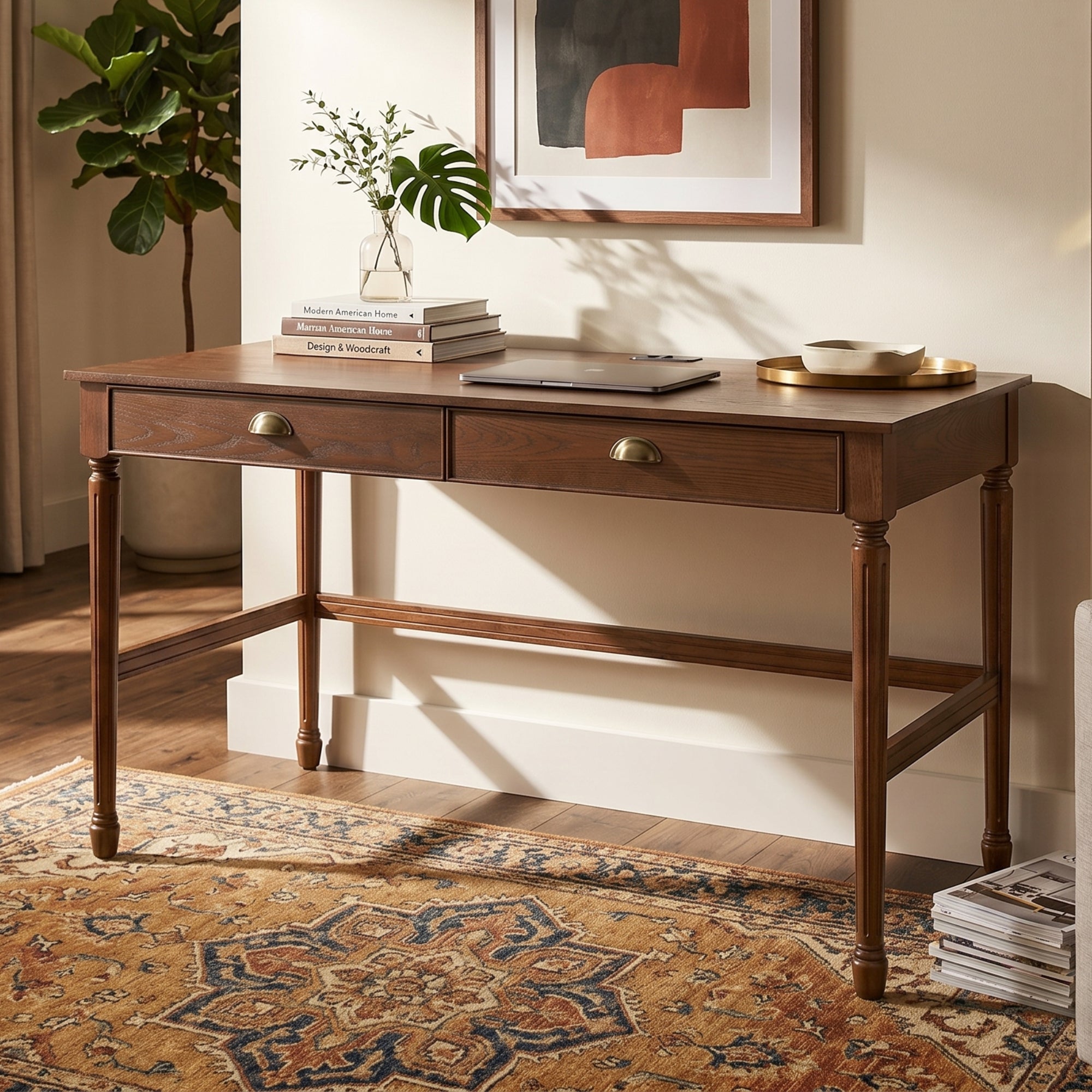
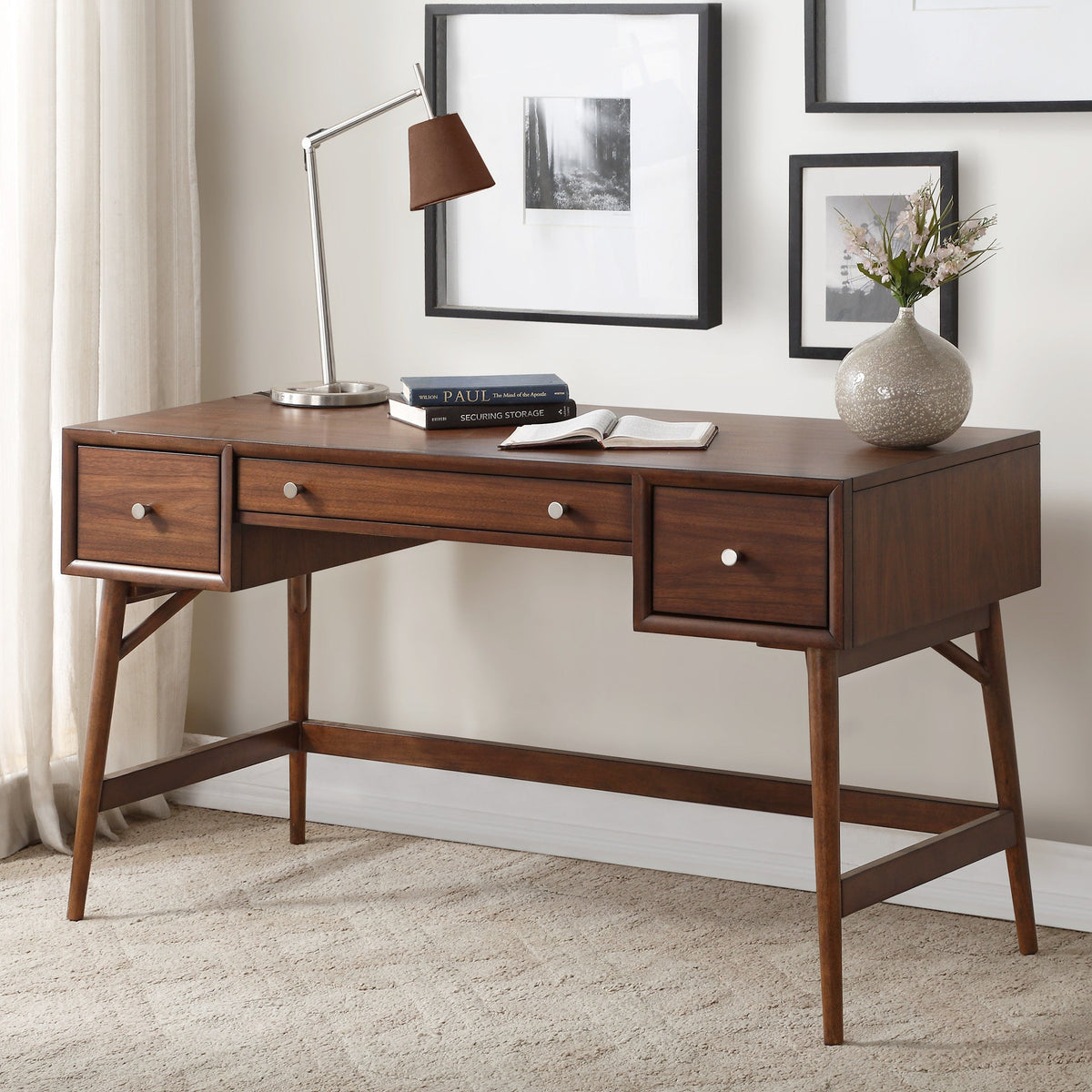
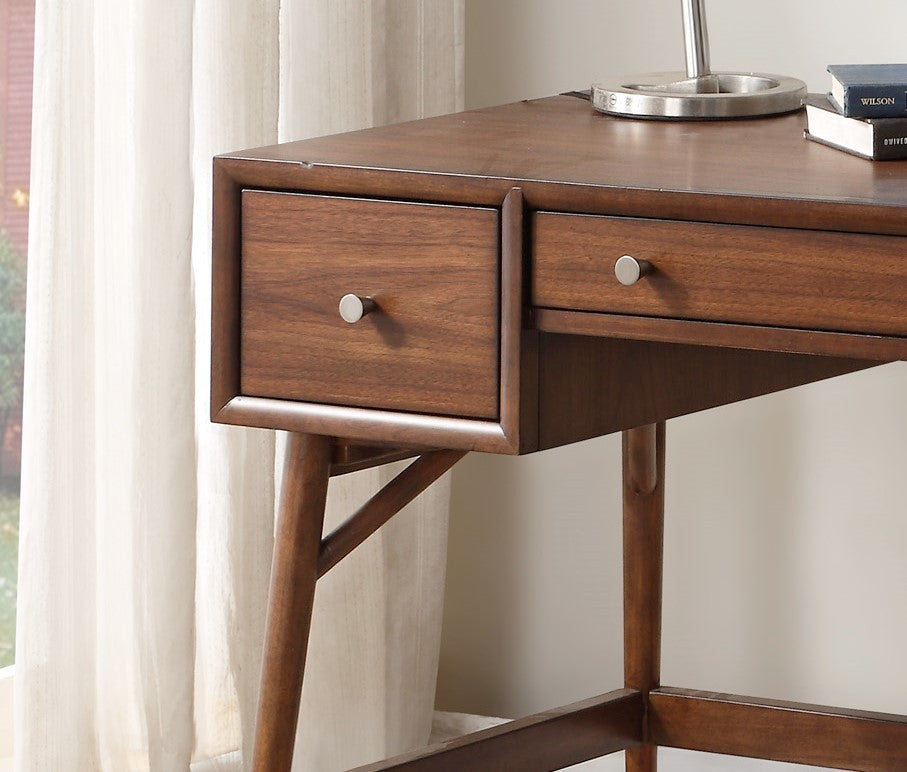
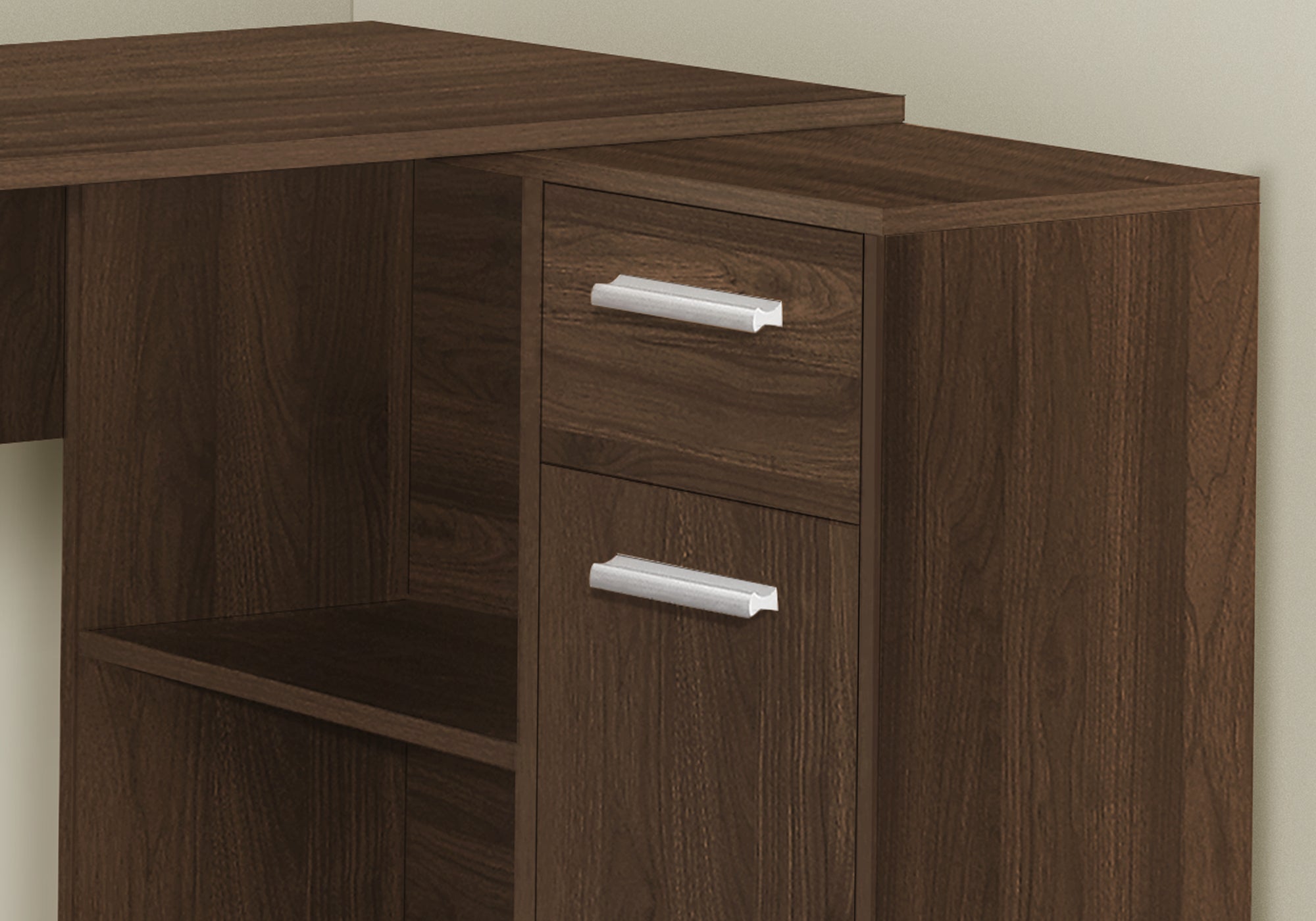
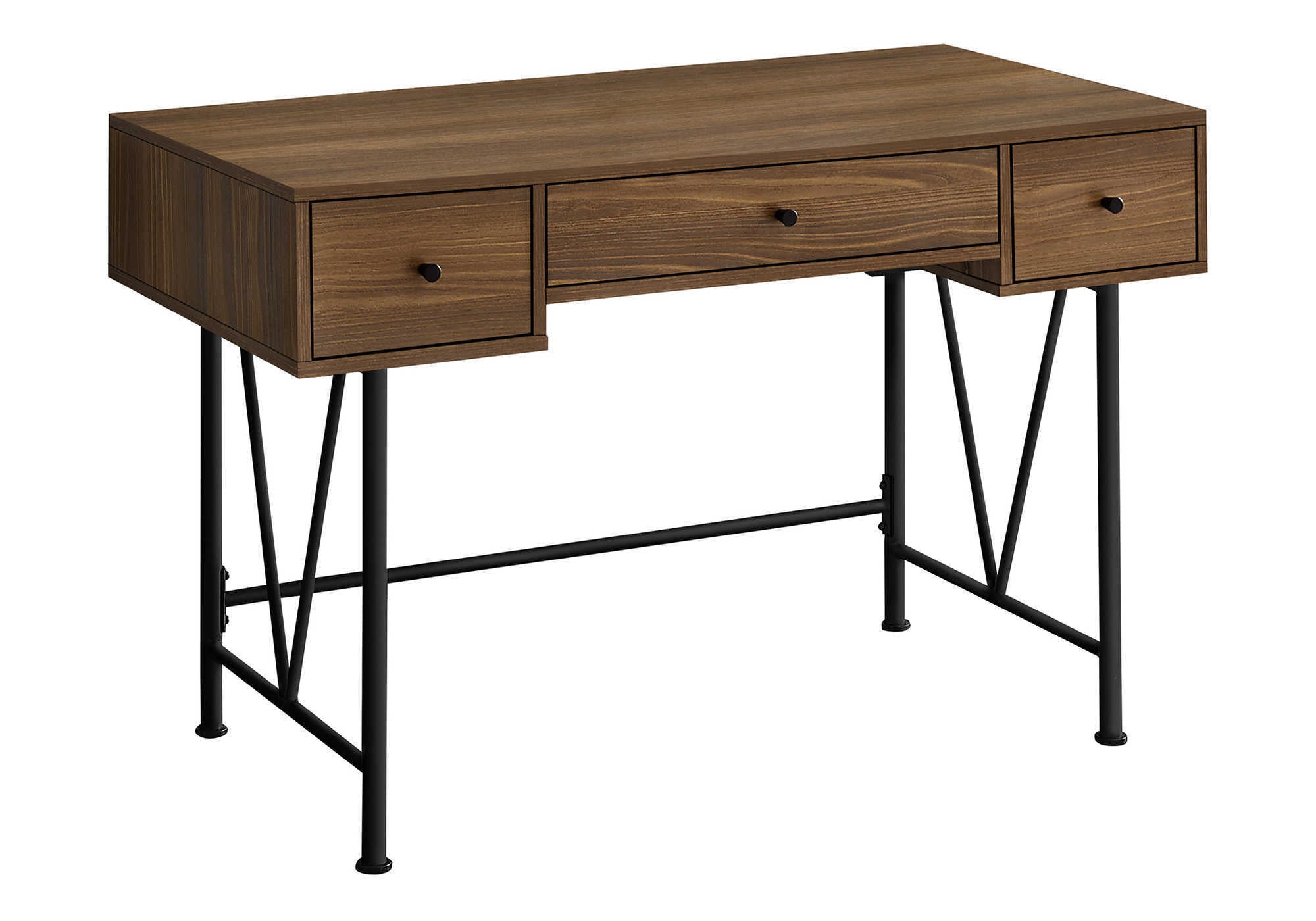
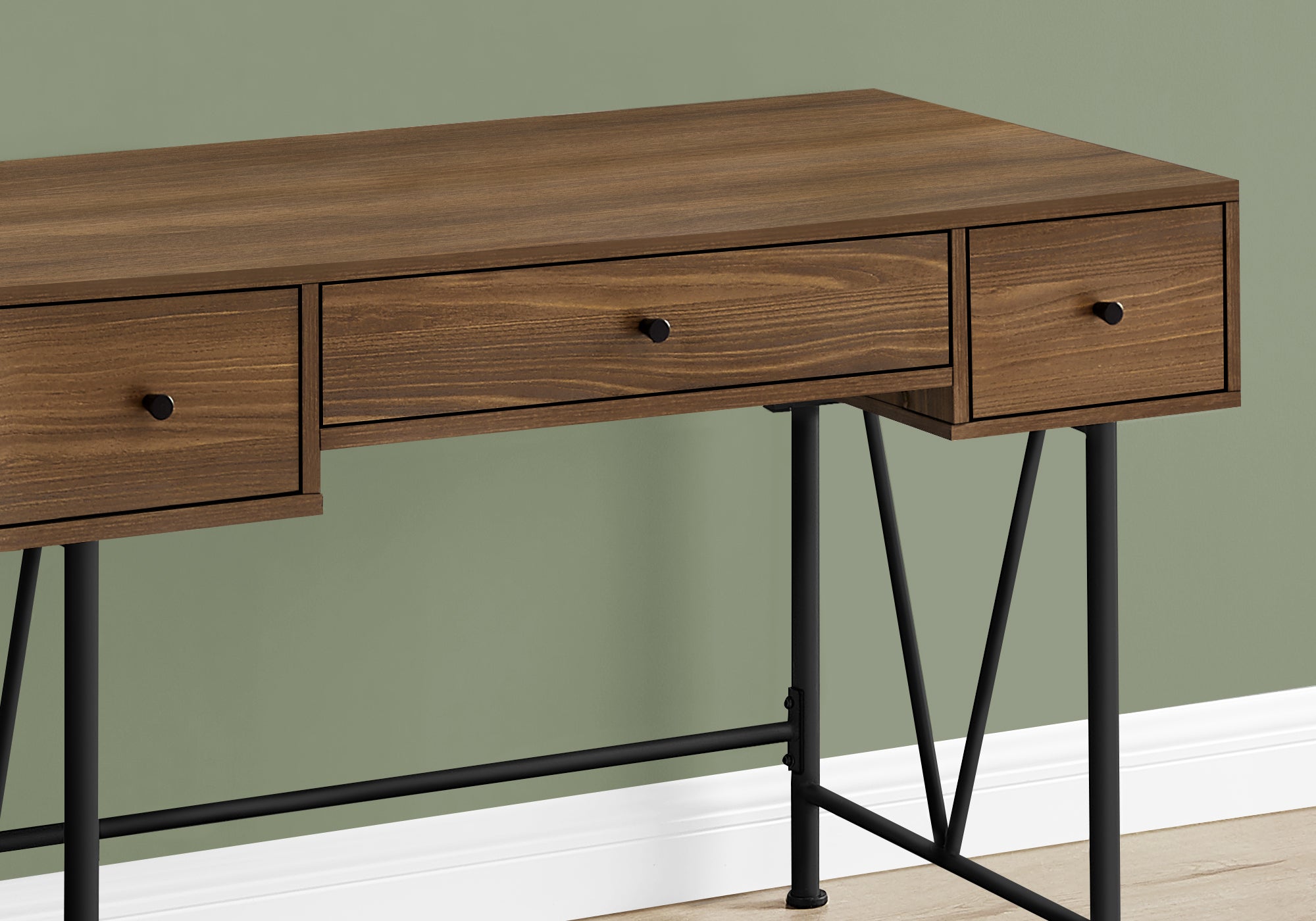
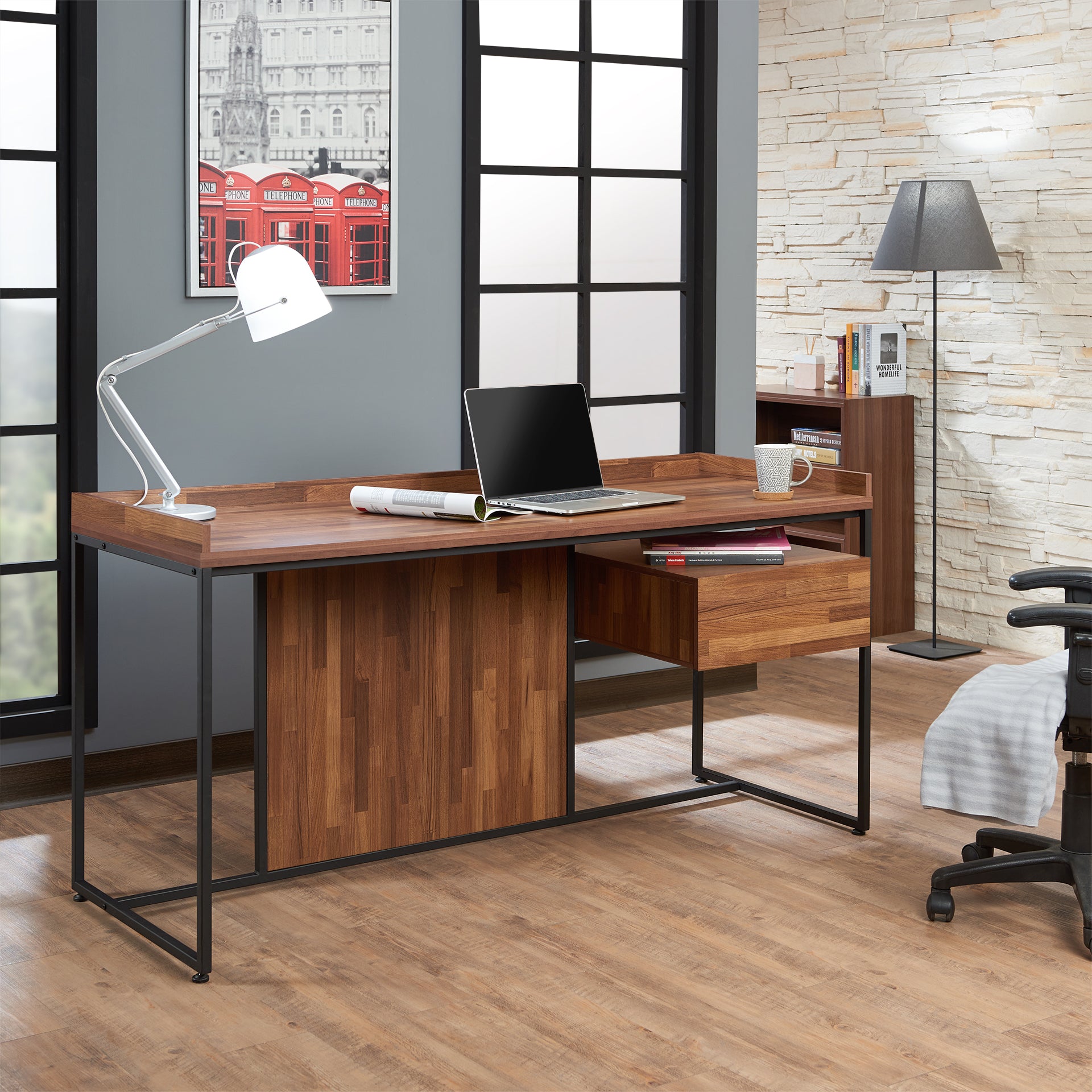
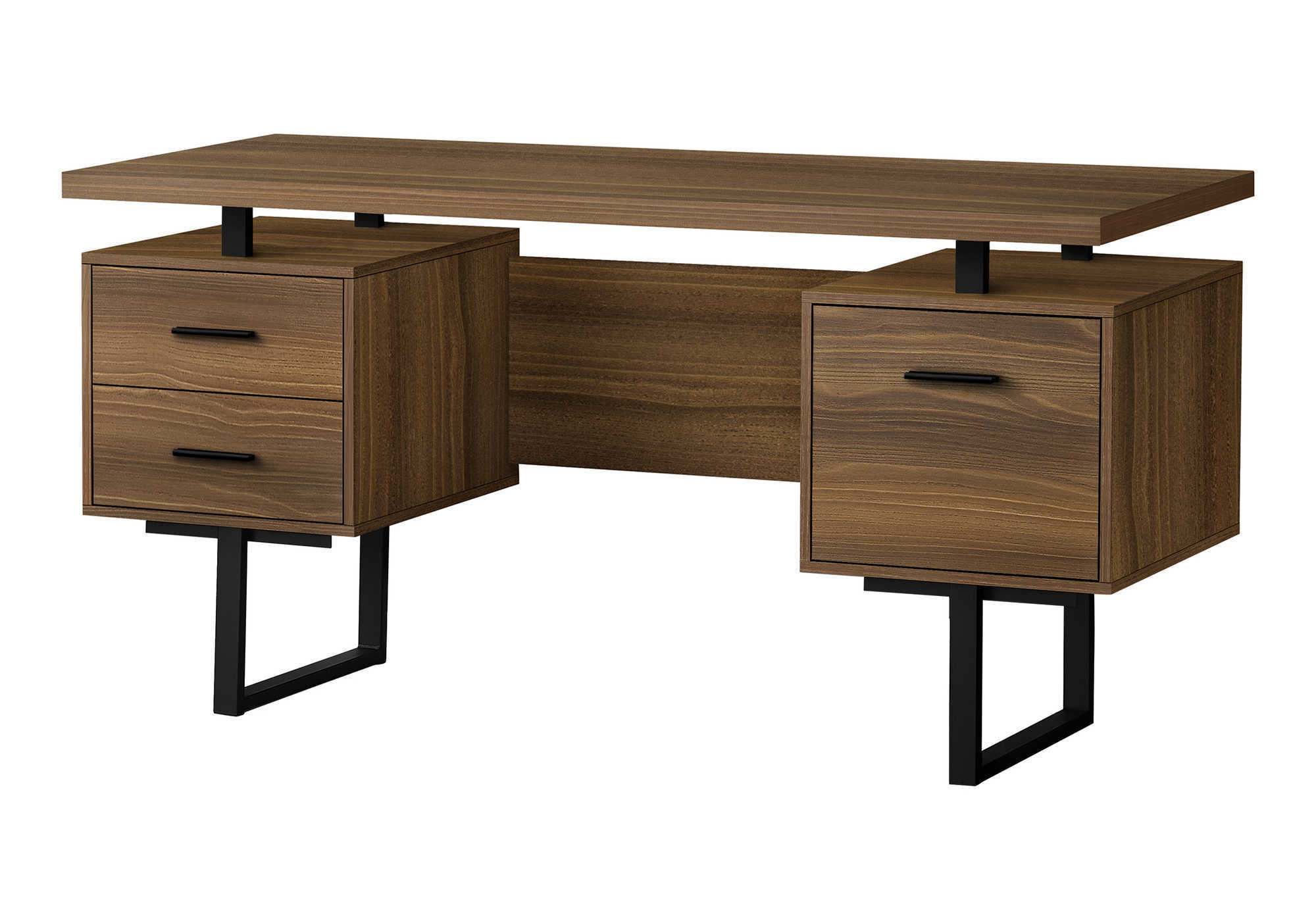
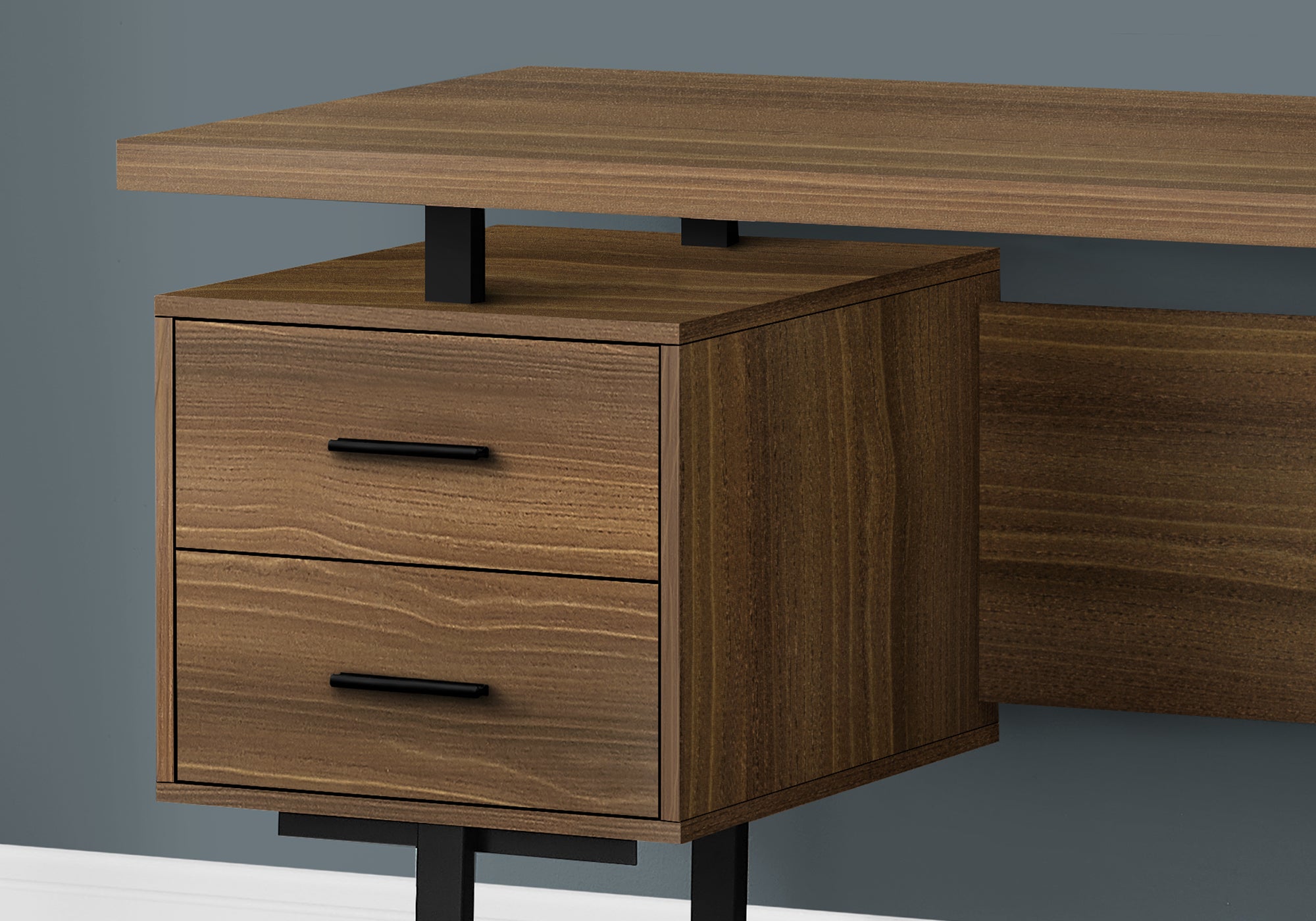
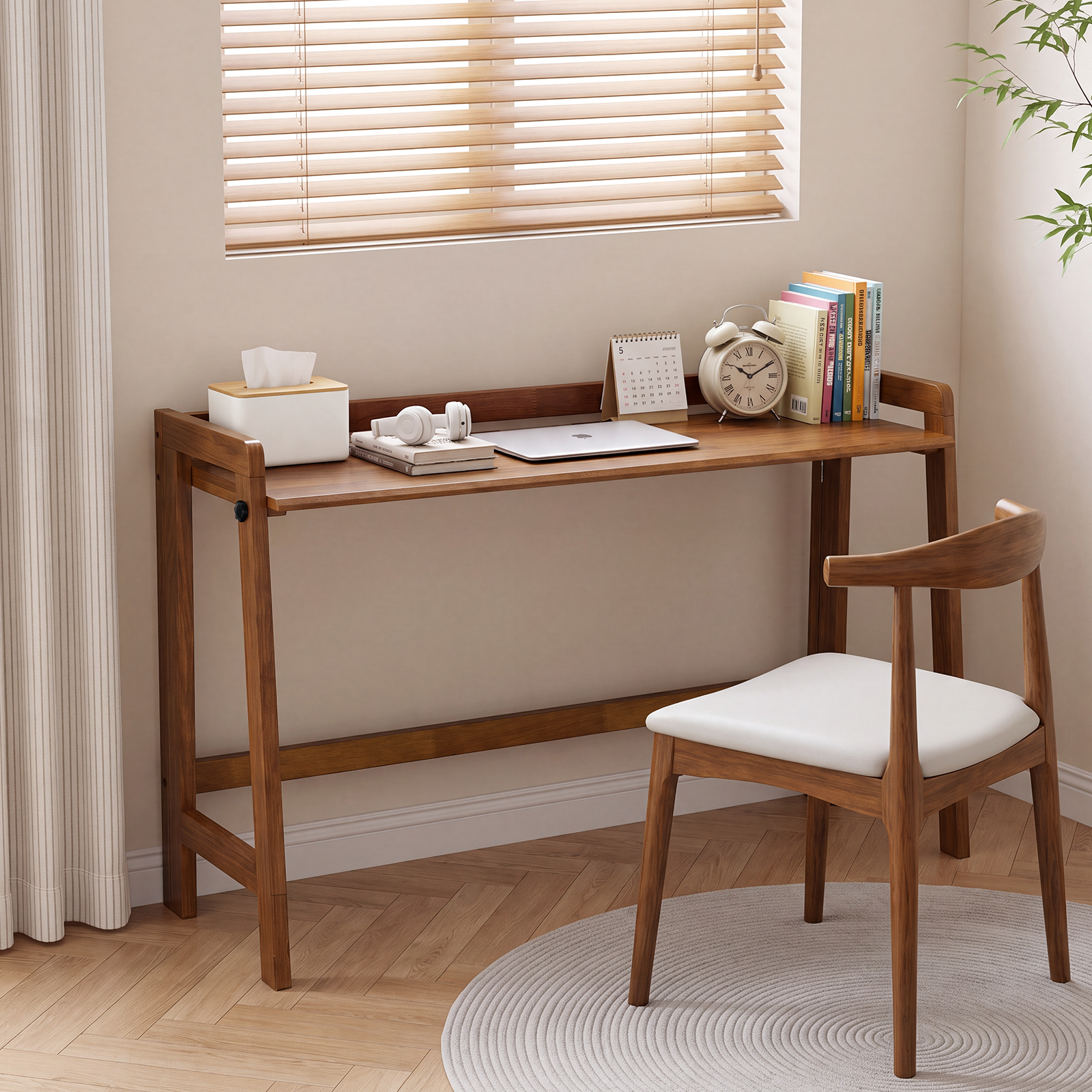
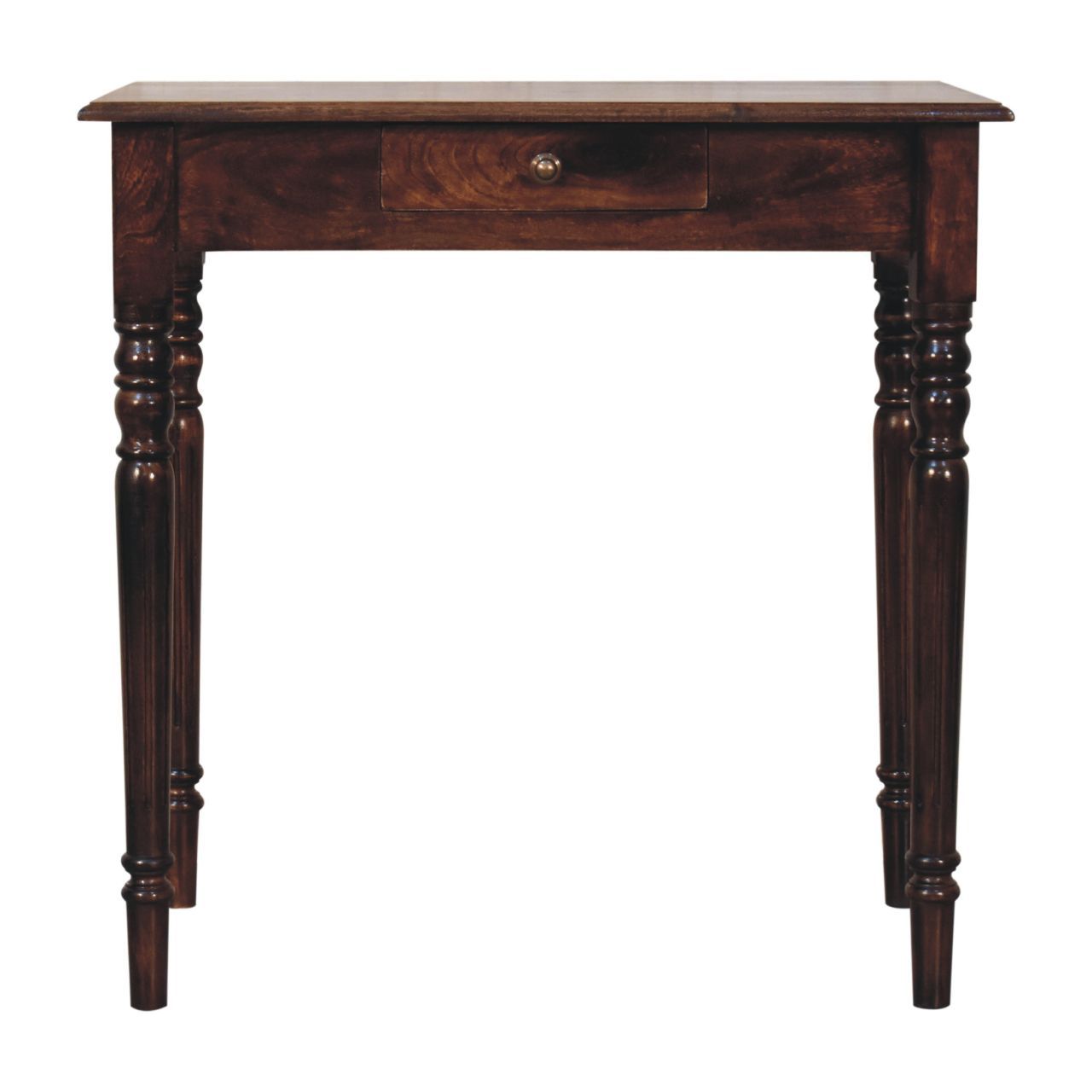
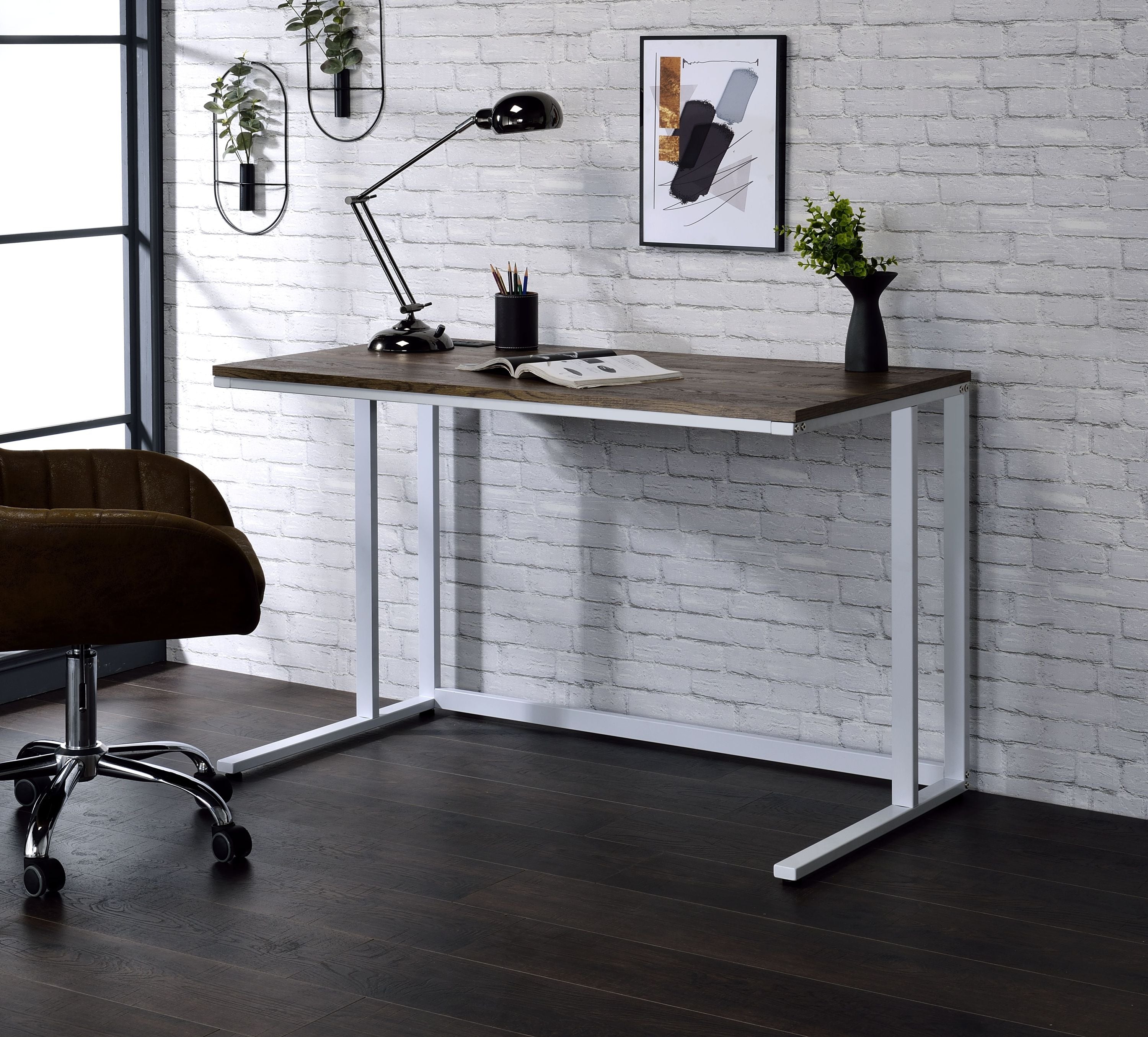
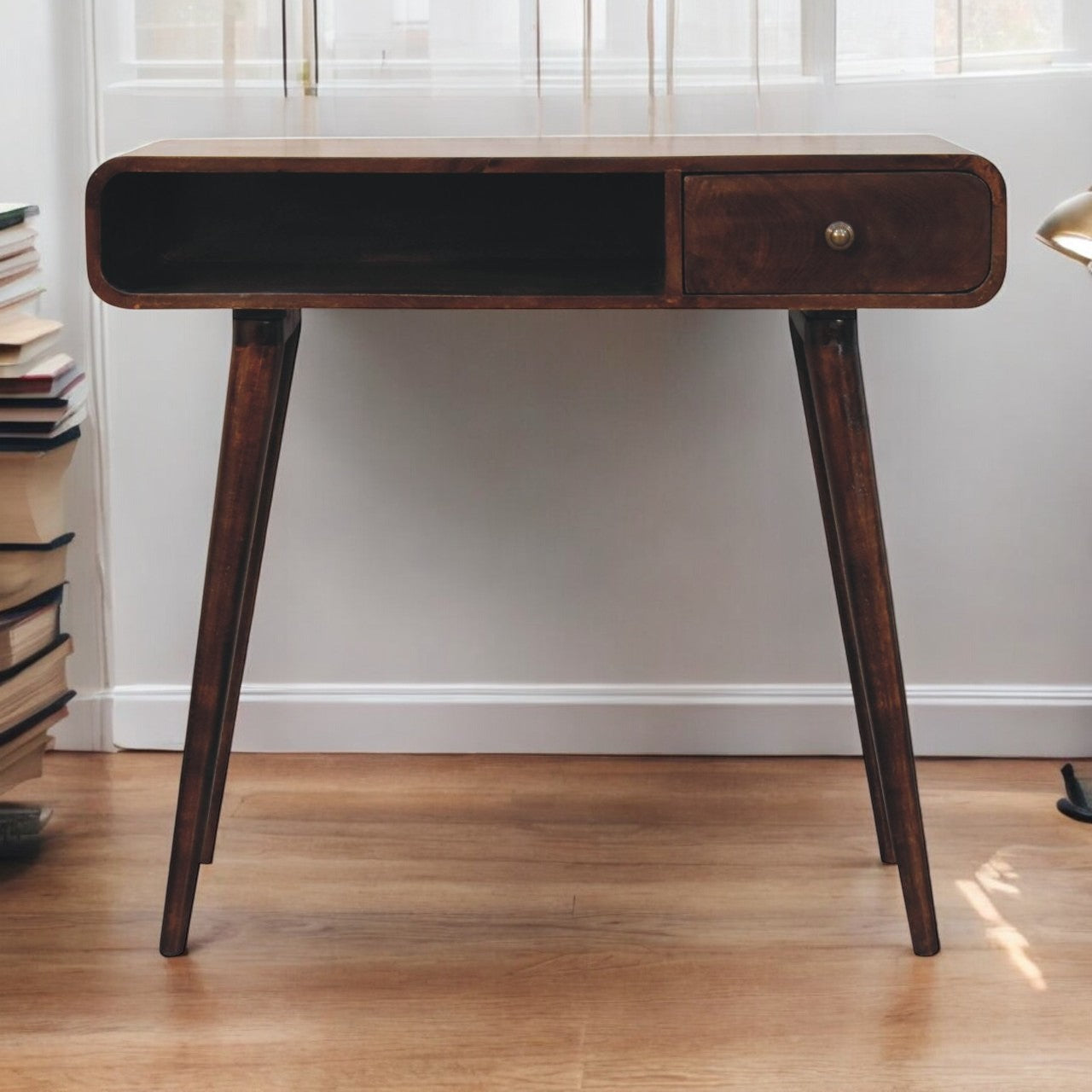
Walnut desks, solid wood and wood-look
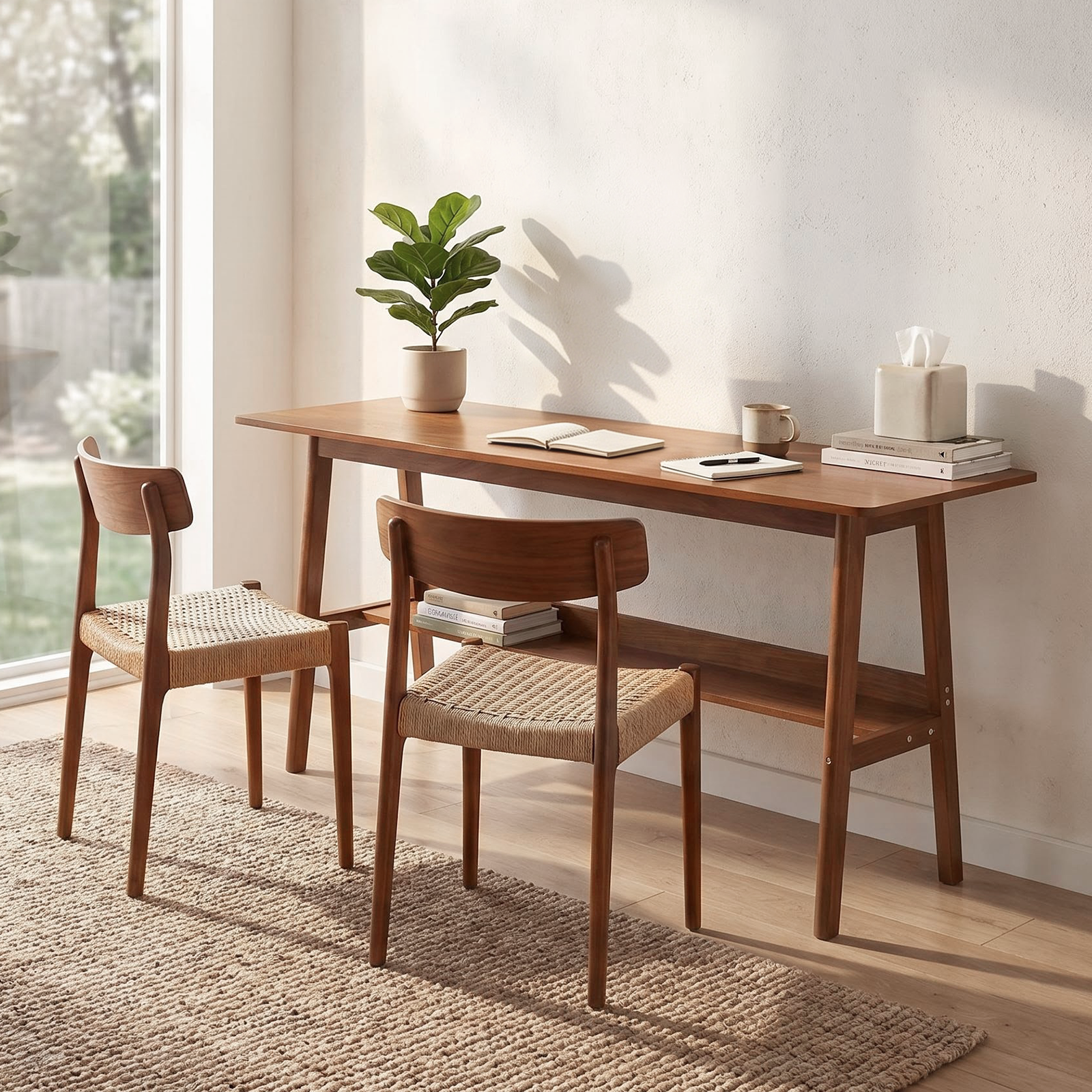
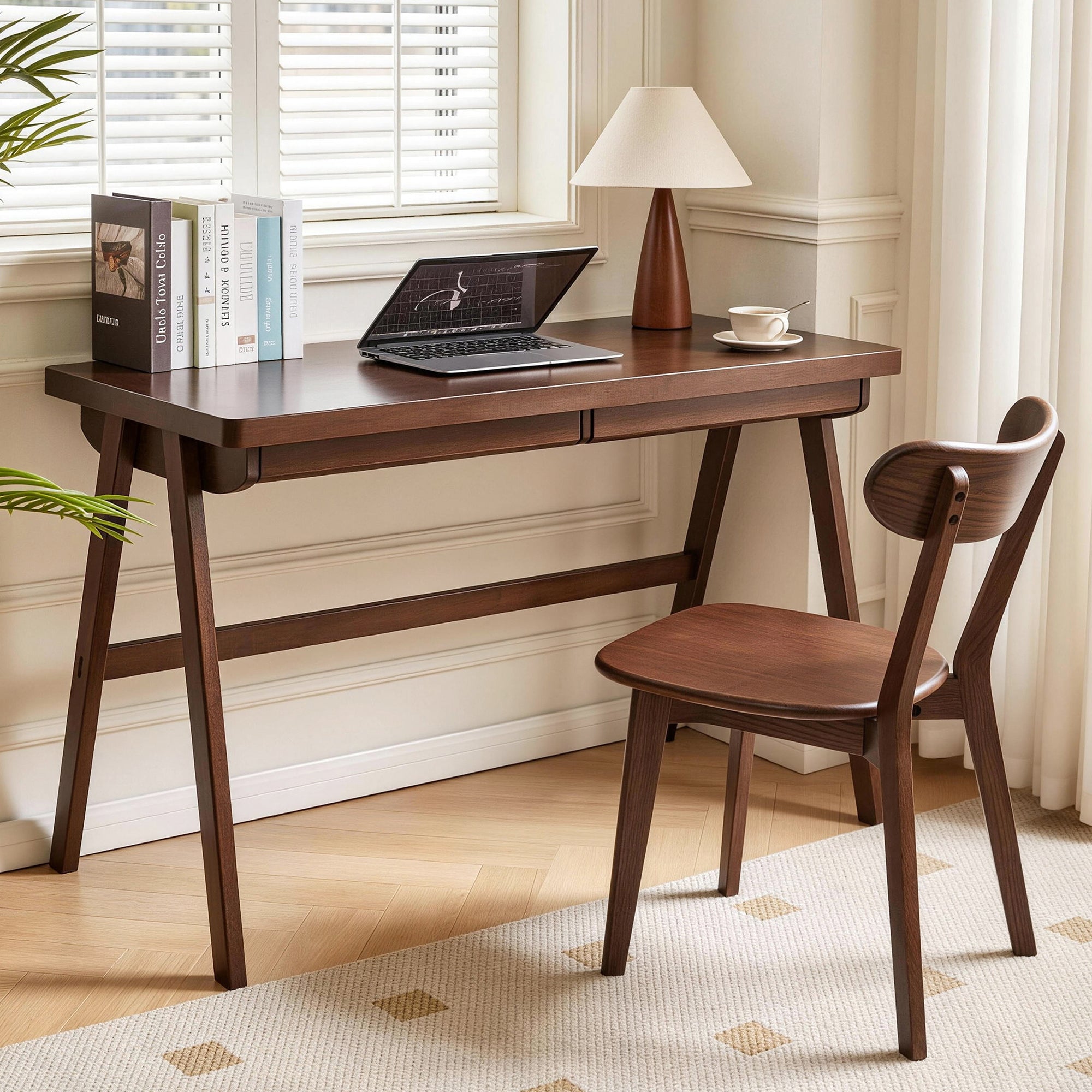
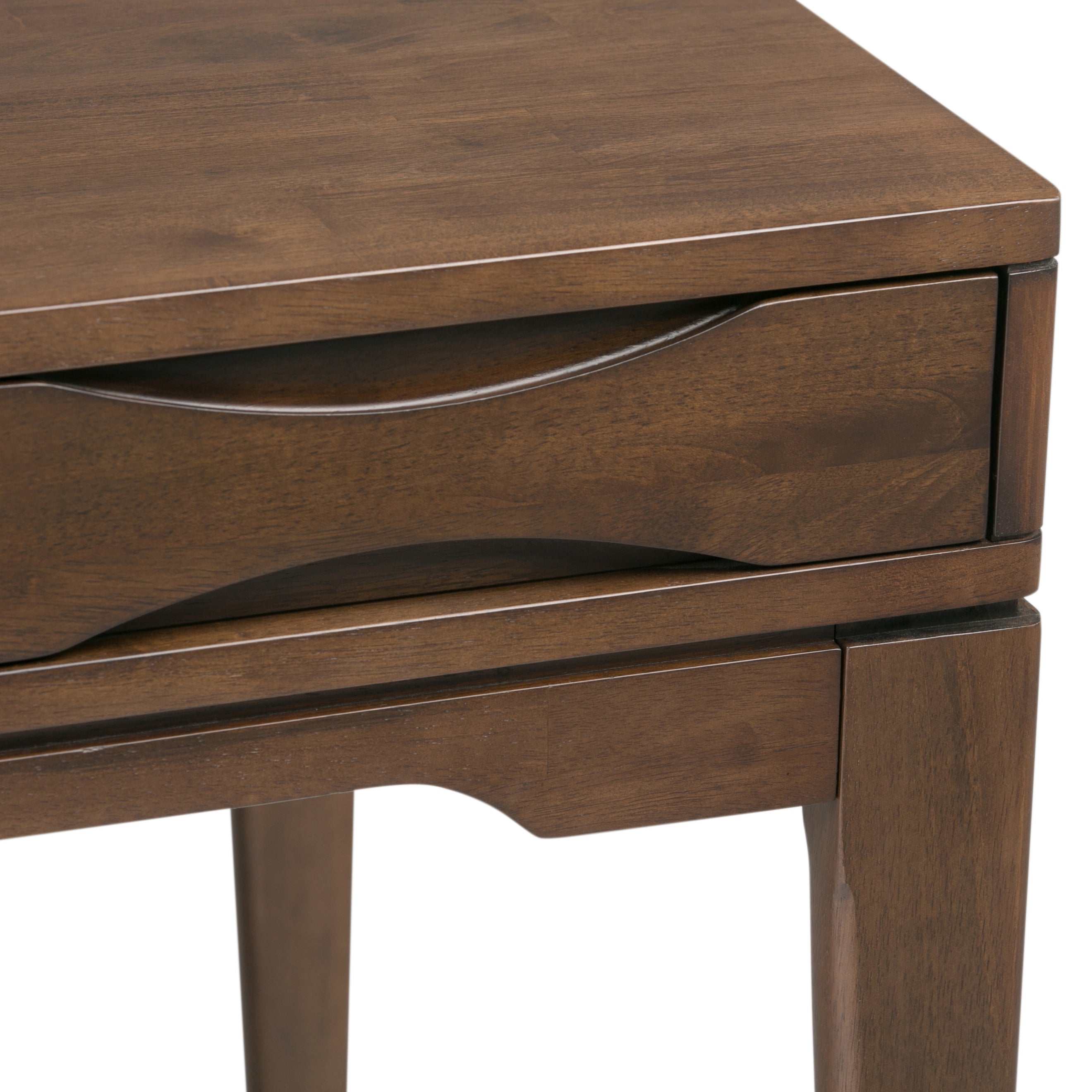
Walnut is a deep chocolate brown with a straight, even grain, and that evenness is why it works on a wide top: there is nothing busy to distract from what is on the desk. It lightens very slightly with age rather than fading.
About half of these are solid wood and half are board with a walnut-look surface. Solid wood resists the dents a keyboard tray or a monitor foot puts into a softer material, and an edge that gets knocked can be sanded back. Board gives an even finish across a wide panel at lower cost. Every product page states which it is.
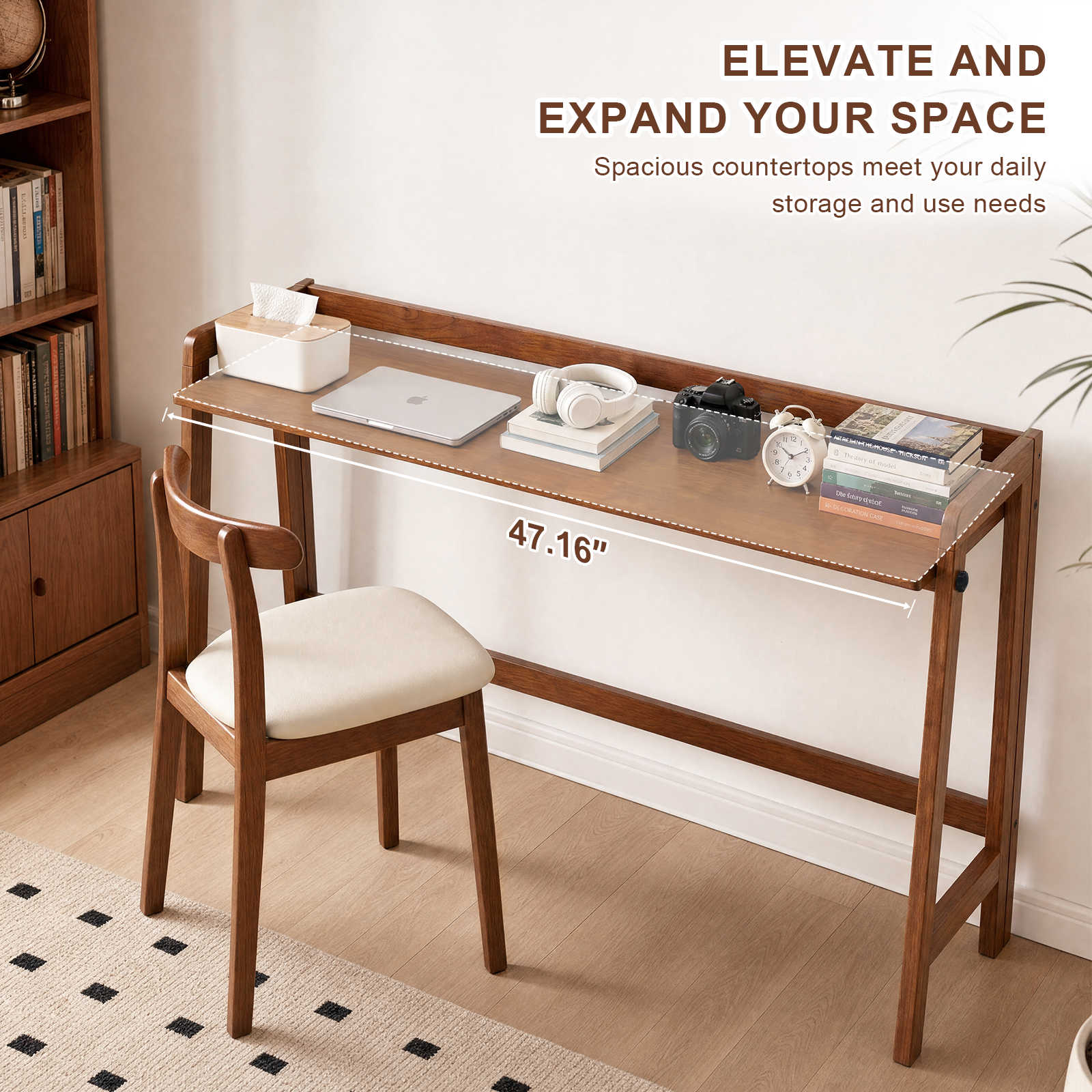
Walnut desk sizes and depth
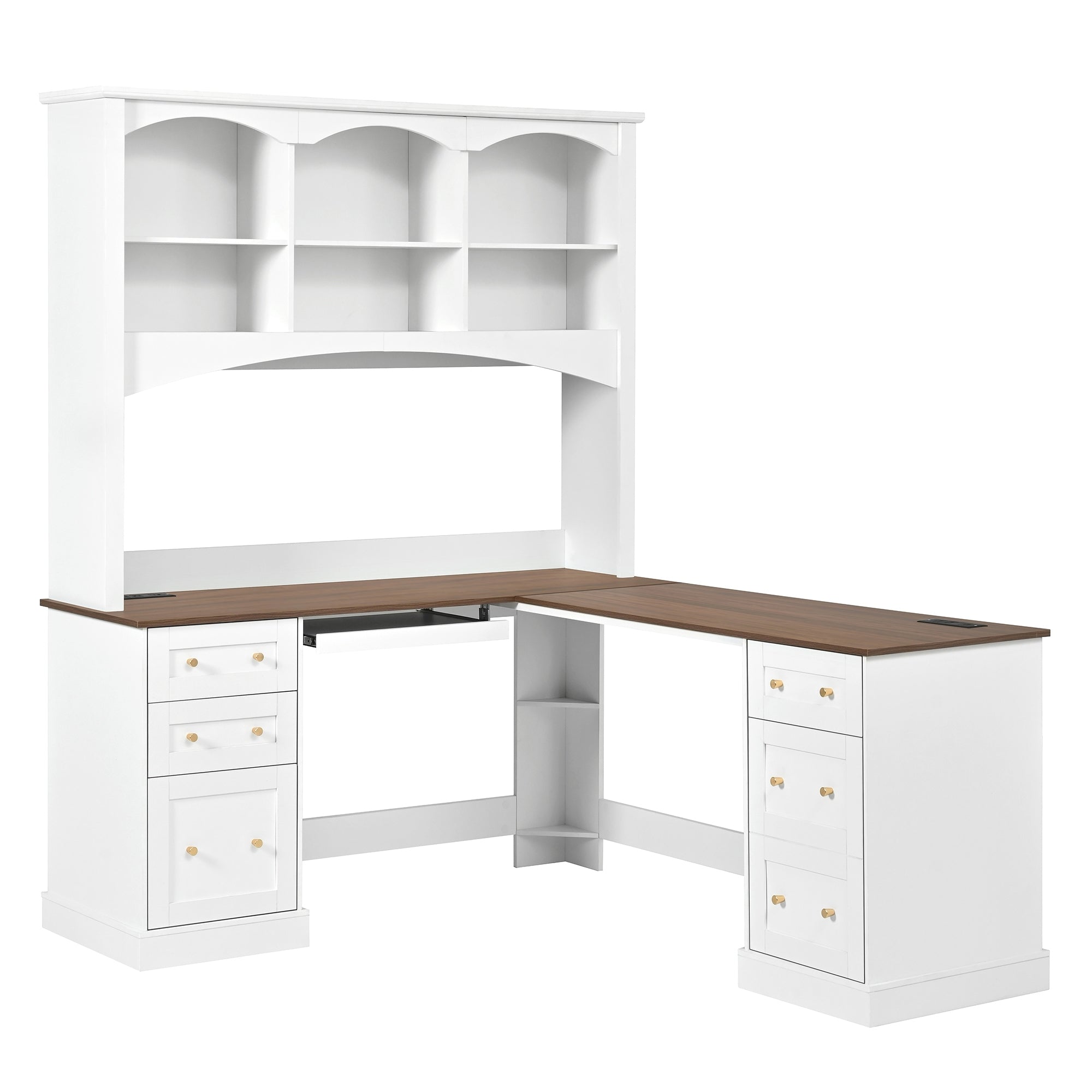
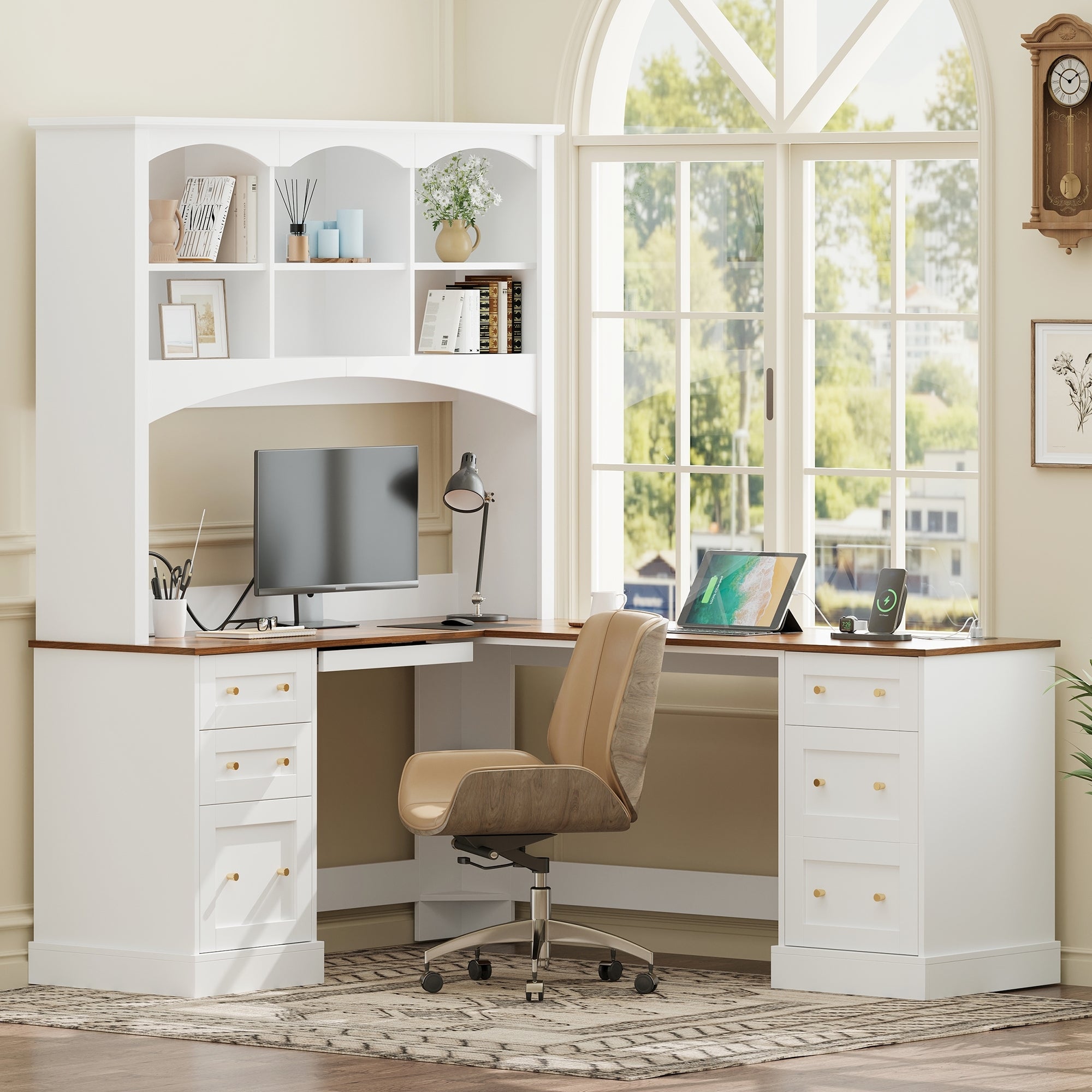
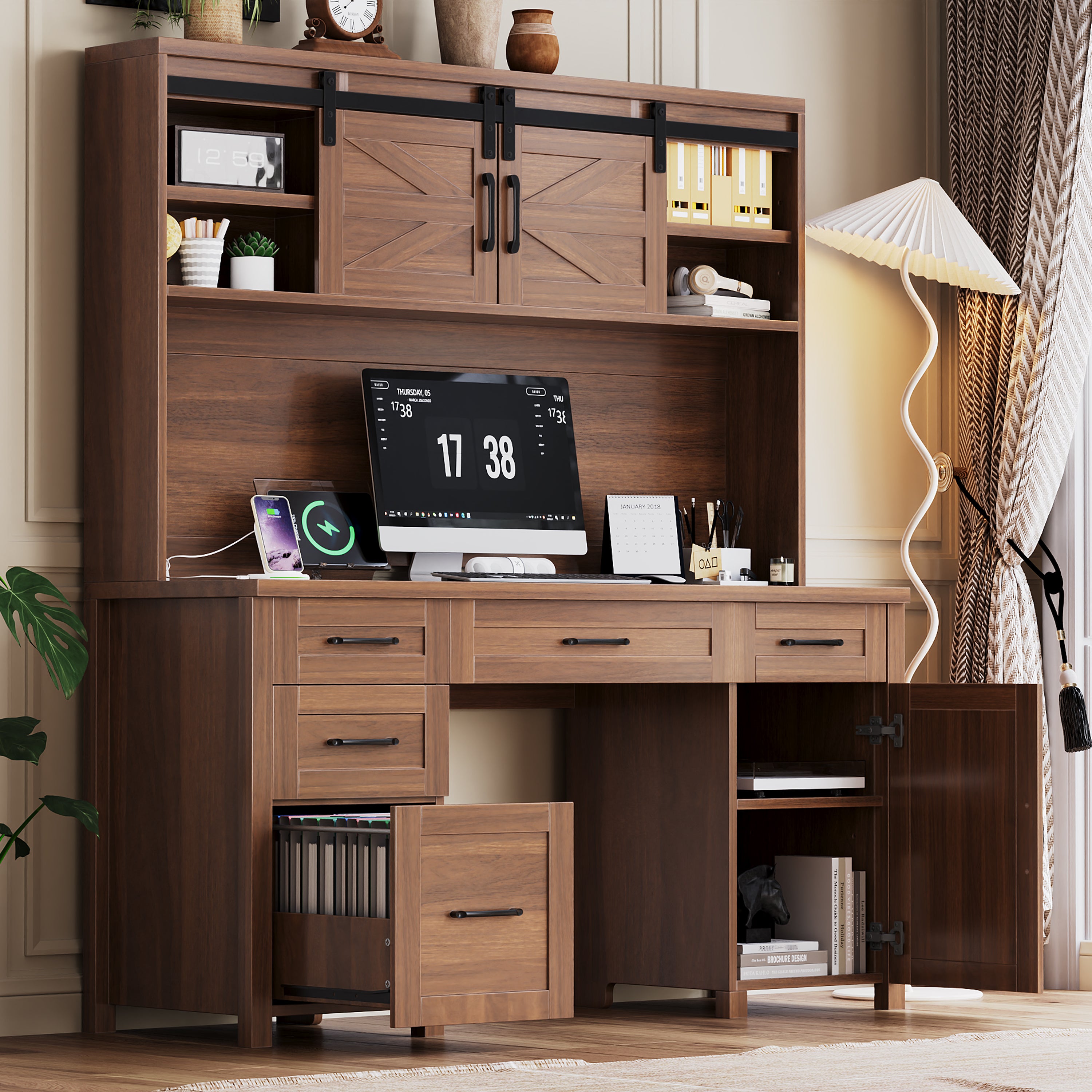
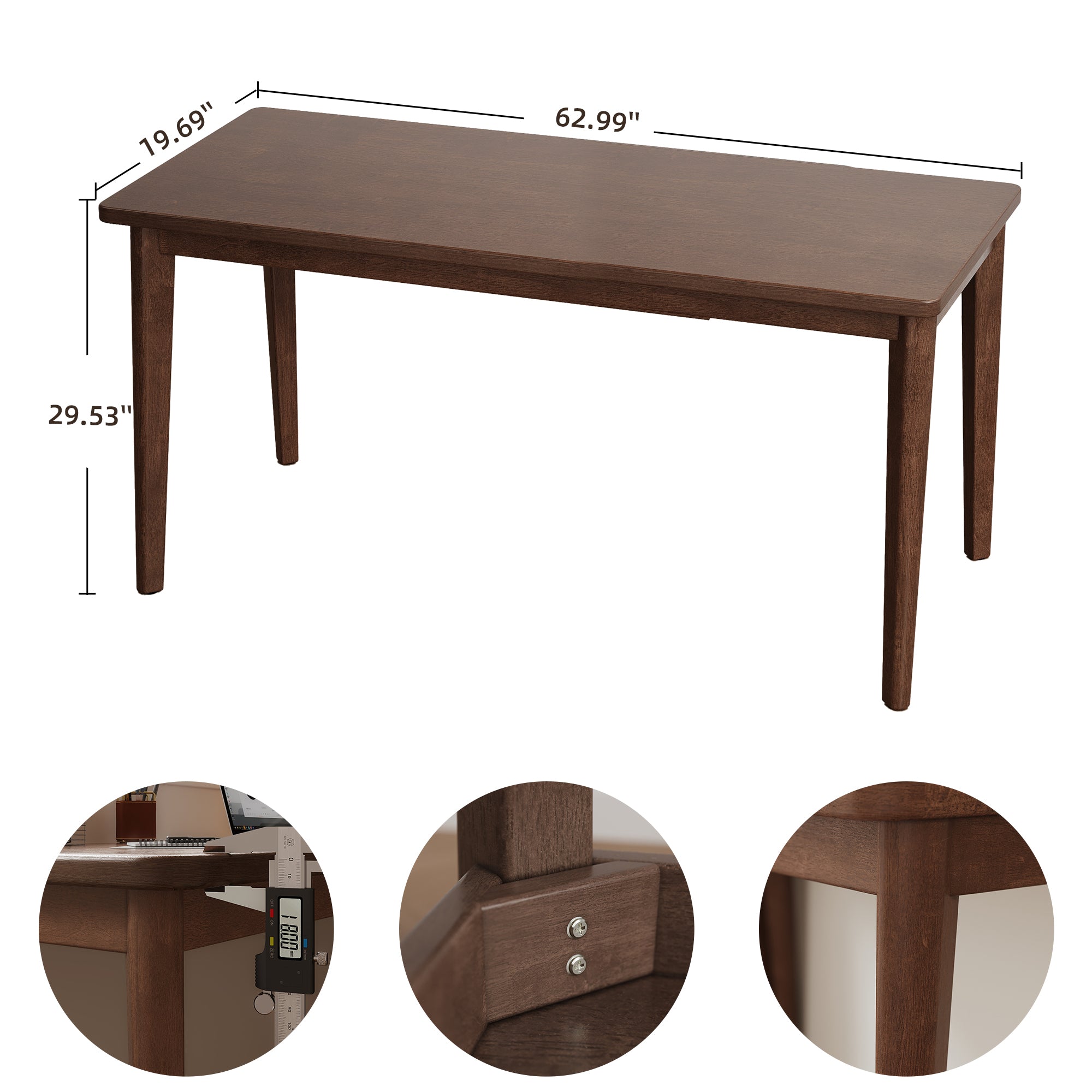
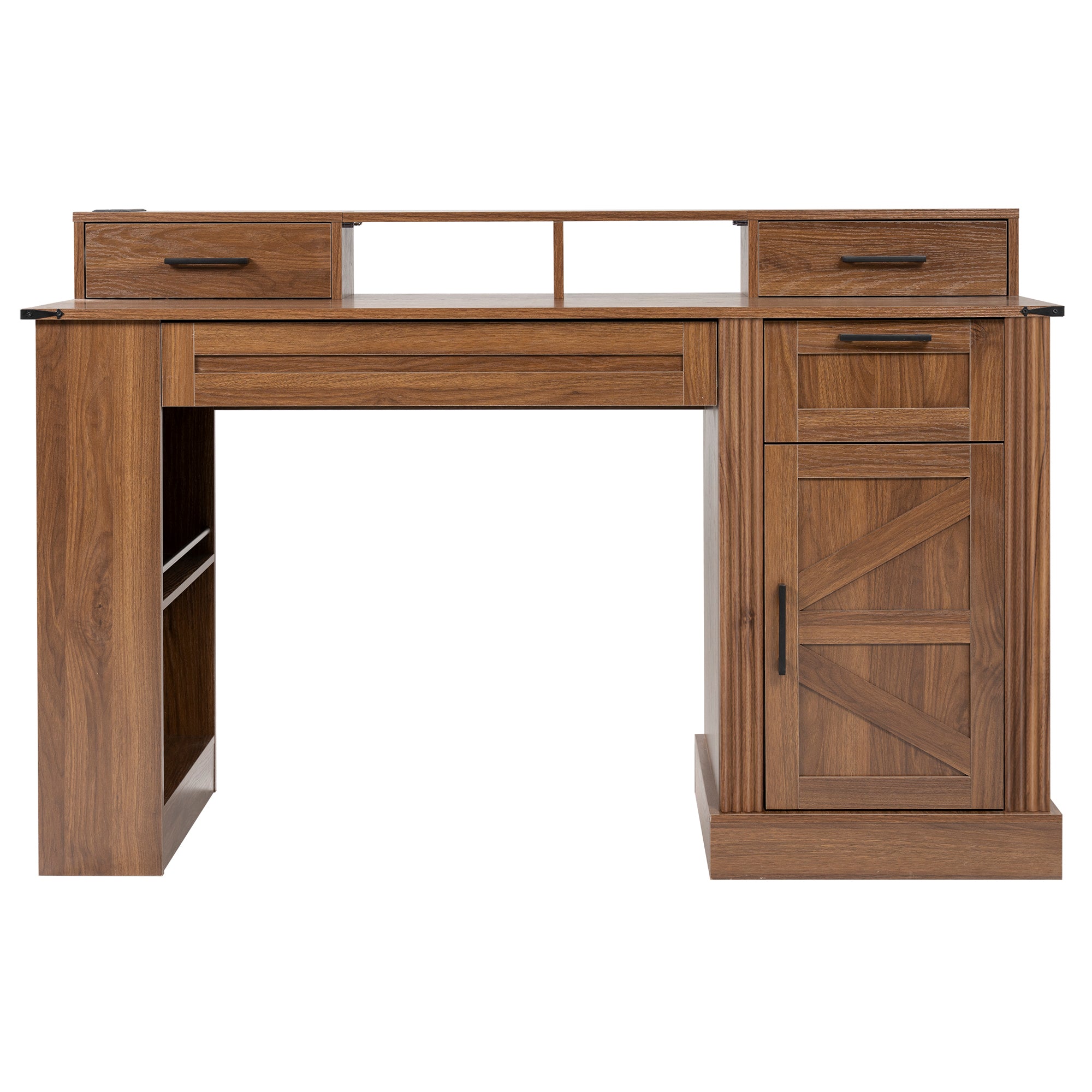
Widths run 31.9 to 70.9 inches and depths 14.7 to 59, where the deepest figures belong to corner layouts and describe the footprint rather than the desktop. Heights run 29.2 to 75.4, and anything above desk height is carrying a hutch.
Under 20 inches deep a monitor sits too close for a full day, so take the deeper option if the desk is for real work rather than occasional use.
Walnut desk pairings and finishes
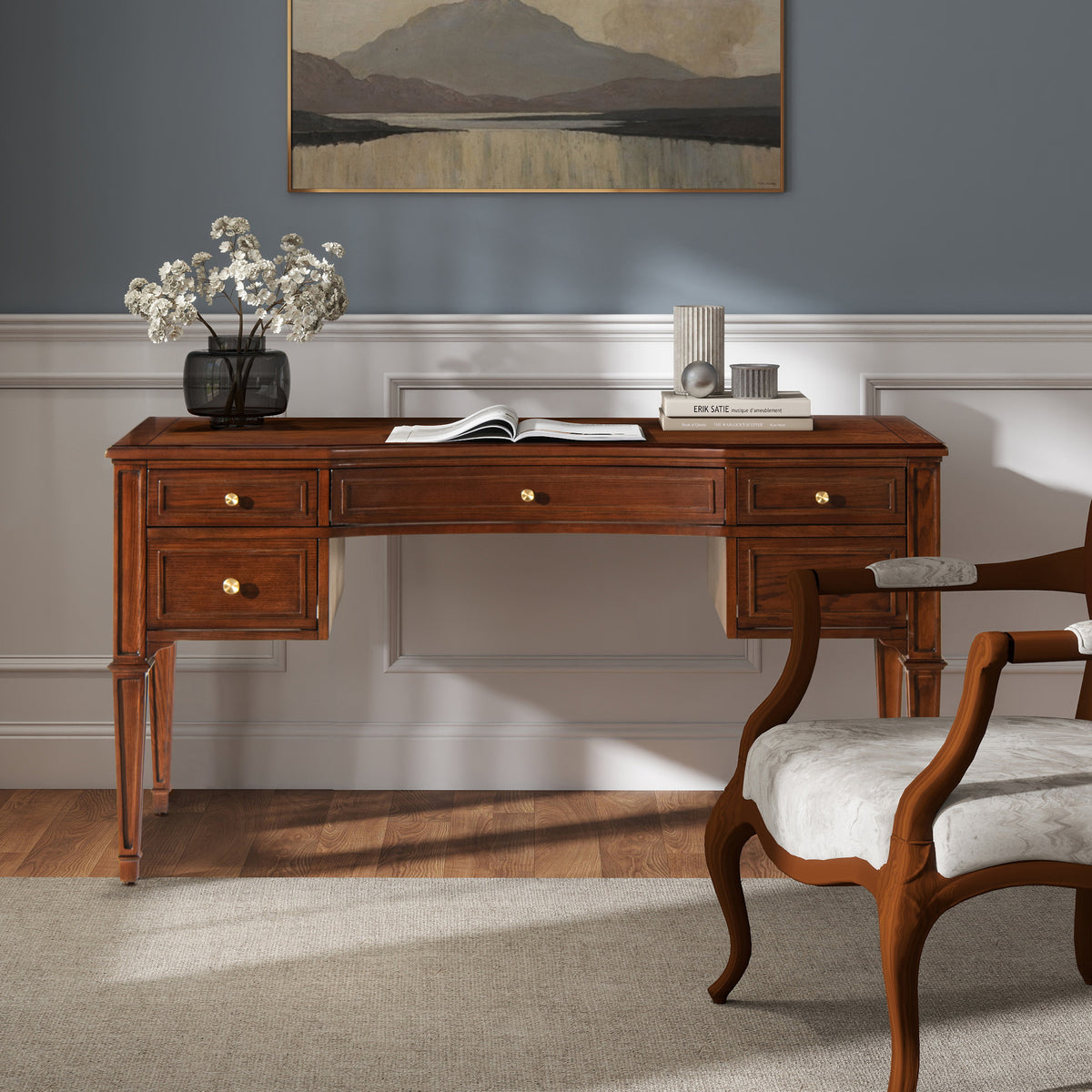
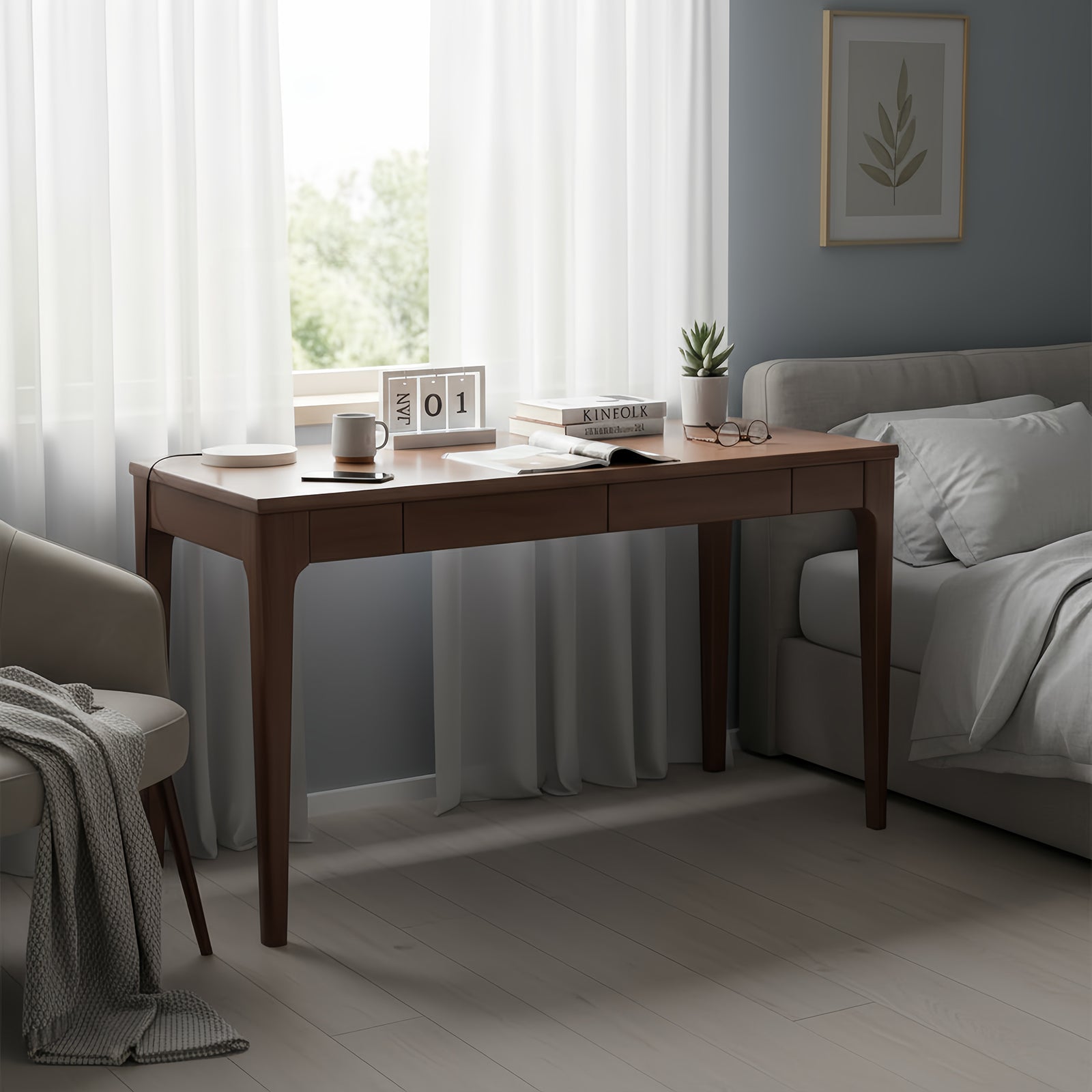
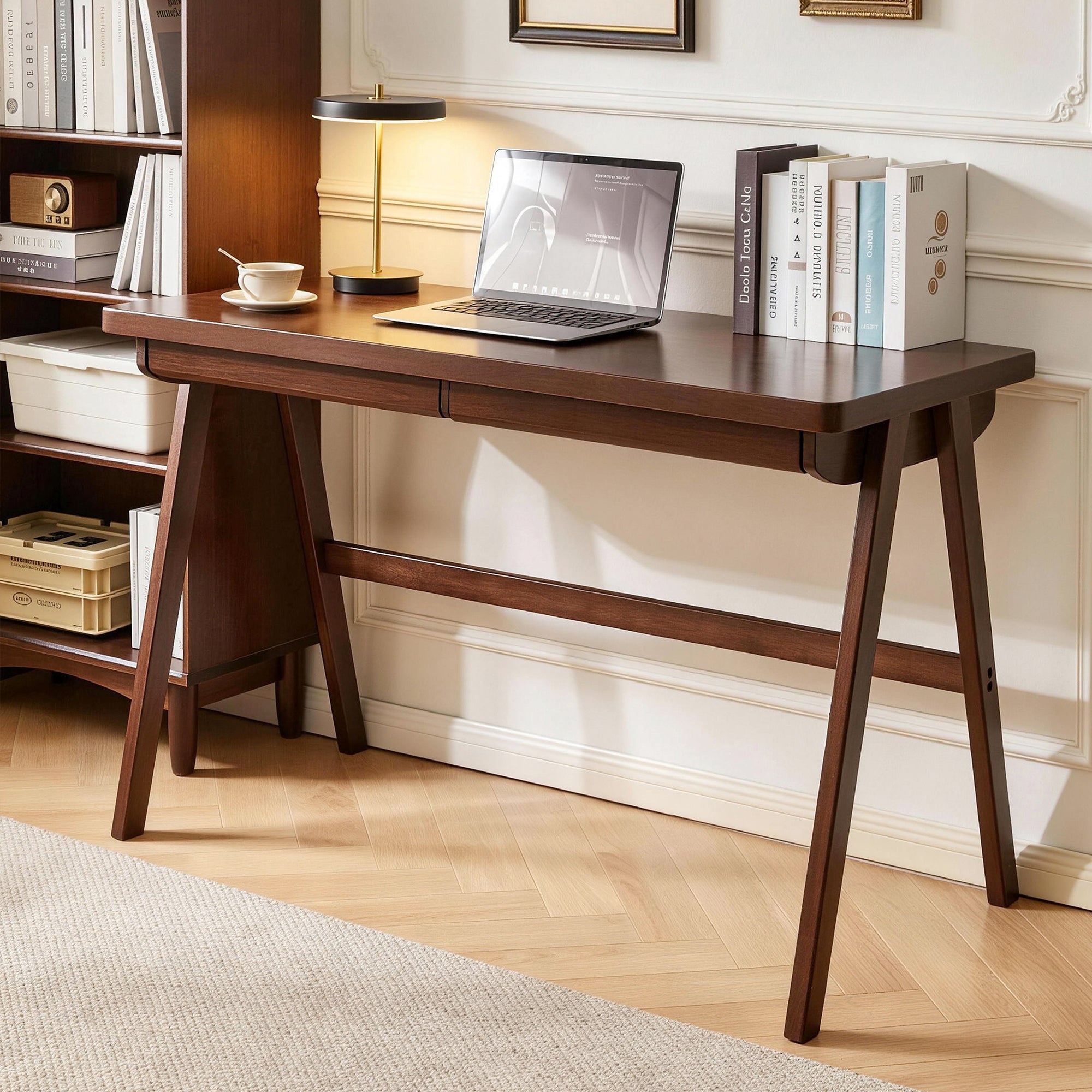
Walnut sits well against off-white, warm grey, sage and deep green, all of which let the brown read as warm rather than muddy. Black hardware and black metal legs sharpen it; brass warms it. Avoid setting it directly beside a cooler wood such as ash or grey-toned oak, because the two undertones fight.
Wipe along the grain with a barely damp cloth and dry it straight away. Blot spills as they happen, since an oiled top will take a ring within minutes where a coated one would not. Skip all-purpose sprays containing ammonia or silicone, which strip an oiled finish and leave a haze on a lacquered one.
Every order ships free with delivery in 5 to 7 days.
More Walnut Desk
By material: Oak · Solid Wood
By style: Writing · Executive · Farmhouse
By feature: With Hutch · L-Shaped · Desk Converters · Desks
Specifications
- Finish
- Walnut
- Width range
- 12.6 to 62 in
- Desk height
- 29 to 30 in
- Construction
- Some are solid wood with a walnut finish, others are engineered board with a walnut-look surface.
- Features available
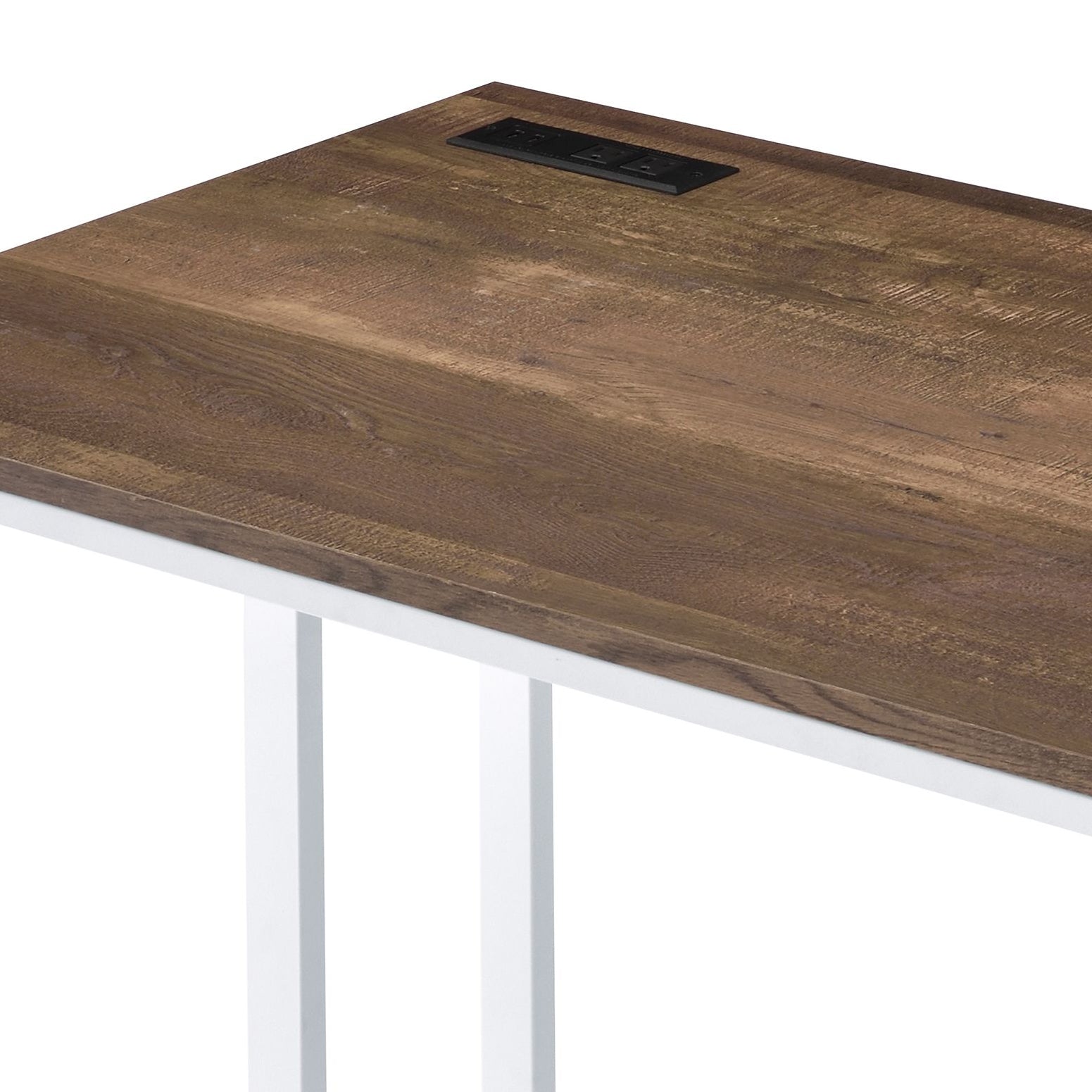
- Hutch, Drawers, Charging station, Keyboard tray, File drawer
- Delivery window
- 5 to 7 days
- Free shipping
- Free
- Colors
- black, brown, gold, walnut, white
- Styles
- barn door, farmhouse, industrial, mid century
- Materials
- glass, mdf, metal, solid wood, vegan leather, wood
- Features
- big and tall, cable management, corner, ergonomic, filing, height adjustable, l shaped, locking, wall anchor, with charging station
- Weight capacity lbs
- 70 to 450
Good to know